
Get Now for $49.95
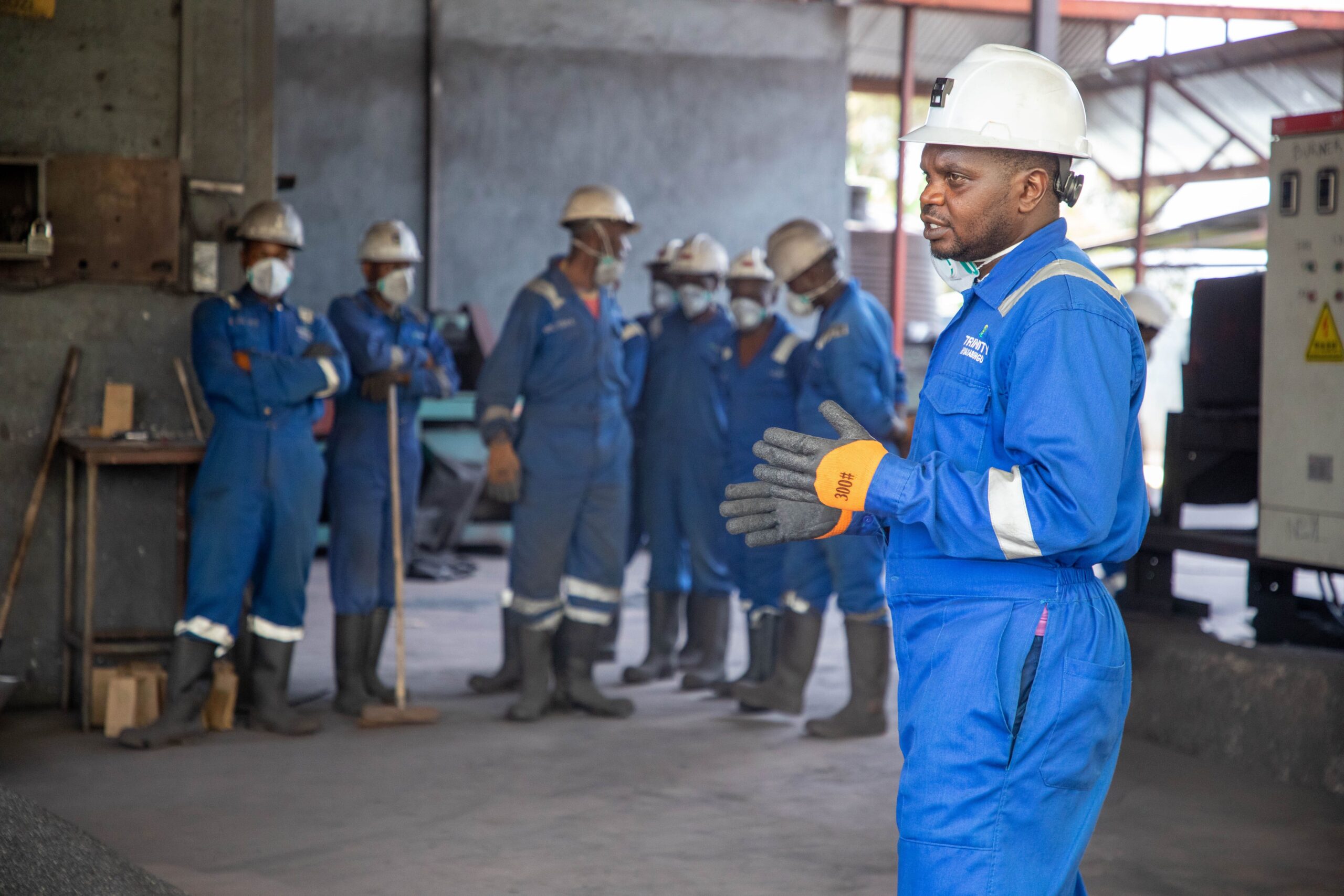
For workers who perform servicing, maintenance, or repair on machines and equipment — and who personally apply lockout or tagout devices. This is the full LOTO procedure course covering all eight steps, all energy types, and all device types.

For workers who operate equipment that may be locked or tagged out, or who work in areas where LOTO is being performed. Awareness training teaches workers to recognize LOTO devices and understand why they must never attempt to restart or re-energize locked-out equipment.

OSHA requires every employer with covered equipment to have a written energy control program and machine-specific LOTO procedures for each piece of equipment. Aggie Safety provides program development support as an add-on to training — so your team is not just trained, but your written documentation is audit-ready.
29 CFR 1910.147 establishes comprehensive requirements for the control of hazardous energy. Compliance requires three elements that must work together: a written program, machine-specific procedures, and documented training.
29 CFR 1910.147(c)(1) — Written Energy Control Program: Every employer must establish, document, and utilize energy control procedures covering the scope, purpose, and rules of the LOTO program. The written program must address the use of lockout vs. tagout, employee compliance requirements, and the means for enforcing procedures — including removal of unauthorized devices. This written program is the first document an OSHA inspector requests during a LOTO inspection.
29 CFR 1910.147(c)(4) — Energy Control Procedures (Machine-Specific): Employers must develop, document, and use energy control procedures for each machine or piece of equipment where unexpected energization or startup could cause injury. Each machine-specific procedure must identify the types and magnitudes of energy, the location of energy isolation points, the specific LOTO devices required, and the sequence of steps to achieve and verify zero energy state.
29 CFR 1910.147(c)(6) — Periodic Inspection: Energy control procedures must be reviewed at least annually by an authorized employee other than the one using the procedure. The inspection must be certified in writing with the date, equipment inspected, names of employees included, and the name of the inspector.
29 CFR 1910.147(c)(7) — Training and Retraining: Authorized employees must be trained in recognition of applicable hazardous energy sources, the type and magnitude of the energy present, and the methods and means necessary for energy isolation and control. Affected employees must be trained in the purpose and use of LOTO procedures. Retraining is required when a change in machines or processes presents a new hazard, or when a periodic inspection reveals deficiencies in employee knowledge.
29 CFR 1910.147(d) — Sequence of Lockout/Tagout Procedure: The standard prescribes an eight-step sequence for energy control: notify, identify, shut down, isolate, apply devices, release stored energy, verify zero state, and restore energy. Deviation from the sequence — particularly skipping stored energy release or verification — is the most common cause of LOTO-related injuries and fatalities.
29 CFR 1910.147(d) defines the sequence that authorized employees must follow. The Aggie Safety course walks through each step with practical examples for all energy types — not just electrical.
The most common LOTO mistake is isolating electrical power and overlooking other stored energy sources. The Aggie Safety course covers all energy types defined under 29 CFR 1910.147, with machine-specific isolation methods for each.
LOTO Hasp: Multi-lock hasp that allows multiple employees to apply their own personal lock to a single isolation point. Required when more than one authorized employee is working on the same machine. Each employee applies and removes only their own lock.
Breaker Lockout Device: Clamp-style device that fits over a circuit breaker in the tripped or open position and accepts one or more padlocks. Prevents the breaker from being reset while LOTO is active.
Plug Lockout / Bag Lockout: For corded equipment with plug-in power — a plug lockout or bag lockout device encases the plug and prevents reconnection during servicing.
Ball Valve Lockout Device: Clamp-style device that fits over a ball valve handle and accepts a padlock, preventing the valve from being opened or closed while LOTO is in effect.
Cable Lockout Device: A flexible cable with a locking loop — used for valves, gas cylinders, and other isolation points where a standard lockout device does not fit. Highly versatile across all energy types.
LOTO Warning Tag: Required in addition to the lockout device. Must list the reason for the lockout, the date it was applied, and contact information for the authorized employee who applied it.
Three straightforward steps. Aggie Safety delivers Step 1 fully online.
Built on 25 years of LOTO training experience. Video instruction covers all topics required under 29 CFR 1910.147(c)(7), followed by a graded quiz with immediate certificate on passing.
| Violation | OSHA Standard | Max Fine (2025) | What This Training Covers |
|---|---|---|---|
| No written energy control program documenting the scope, purpose, and rules of the LOTO program | 29 CFR 1910.147(c)(1) | $16,550 | Written program requirements covered in Chapter 9; program development support available at (713) 613-2830 |
| Generic energy control procedure used instead of machine-specific procedure for each piece of equipment | 29 CFR 1910.147(c)(4) | $16,550 | Machine-specific procedure requirements, Energy Source Information Sheet format, and what must be documented for each machine |
| No annual periodic inspection of energy control procedures — or inspection not documented in writing | 29 CFR 1910.147(c)(6) | $16,550 | Periodic inspection requirements: who must conduct it, what it must cover, and required certification documentation |
| No training documentation — employer cannot demonstrate that authorized or affected employees received LOTO training | 29 CFR 1910.147(c)(7)(iv) | $16,550 | Certificate provides documentation of formal instruction; employers receive sign-in sheet template |
| LOTO applied only to electrical energy; hydraulic, pneumatic, gravity, or other stored energy not isolated or released | 29 CFR 1910.147(d)(5)(i) | $16,550 | All eight energy types covered in full; stored energy release procedures covered in Chapter 6 |
| Worker performs servicing or maintenance on equipment without applying a personal lock — relies on supervisor's lock or "someone else" will lock it out | 29 CFR 1910.147(c)(4)(i) | Up to $165,514 (willful) | Personal lock requirement — one employee, one lock, one key in that employee's exclusive custody |
| Tagout used without justification that equipment cannot be locked out — no written documentation of equivalent protection measures | 29 CFR 1910.147(c)(3) | $16,550 | Lockout vs. tagout distinction, when tagout alone is permitted, and required additional safeguards when tagout must be used |
| Stored energy (pneumatic, hydraulic, gravity) not released or restrained before work begins — zero energy verification skipped | 29 CFR 1910.147(d)(5)(ii) | Up to $165,514 (willful) | Zero energy state verification — the critical step most often skipped; Chapter 7 covers verification methods for all energy types |
| Authorized employee removes another employee's lock, or lock is removed without the applying employee's presence and consent | 29 CFR 1910.147(e)(3) | Up to $165,514 (willful) | Lock removal authority — only the applying employee may remove their own lock; emergency removal procedure and documentation requirements |
Built on 25 years of LOTO training experience. Video instruction covers all topics required under 29 CFR 1910.147(c)(7), followed by a graded quiz with immediate certificate on passing.
When is LOTO retraining required? 29 CFR 1910.147(c)(7)(iii) requires retraining when: (1) a change in machines, equipment, or processes presents a new or different hazard not previously covered; (2) a change in energy control procedures occurs; or (3) a periodic inspection reveals deficiencies in the employee's knowledge or use of energy control procedures. There is no fixed annual renewal interval mandated by the standard — retraining is triggered by change or deficiency. Many employers adopt an annual cycle as a best practice.

29 CFR 1910.147 covers general industry — any workplace where servicing or maintenance of machines and equipment takes place and where unexpected energization could cause injury. The following industries are most frequently cited.
| Industry | Common LOTO Hazards | Most Frequent LOTO Citations |
|---|---|---|
| Manufacturing & Assembly | Electrical + hydraulic on presses, conveyors, CNC machines, injection molding equipment, robotic cells | No machine-specific procedures; stored energy (hydraulic/gravity) not addressed; no annual periodic inspection |
| Oil & Gas Production & Refining | Electrical + pneumatic + steam + gravity on pumps, compressors, heat exchangers, rotating equipment, pressure vessels | Generic procedures instead of equipment-specific; steam and pneumatic energy sources not addressed in LOTO program |
| Food Processing | Electrical + pneumatic + gravity + water pressure on conveyors, mixers, slicers, packaging lines, refrigeration equipment | Electrical isolated but pneumatic and gravity energy not addressed; no written program; no retraining after machine changes |
| Chemical & Petrochemical | Electrical + hydraulic + steam + compressed gas + natural gas on reactors, distillation columns, pumps, heat exchangers | Tagout used without justification; stored energy release not documented; no machine-specific procedures for PSM-covered equipment |
| Construction | Electrical + pneumatic on power tools, concrete equipment, HVAC, electrical panels during renovation | No written program for construction employers; employees performing electrical maintenance without LOTO devices |
| Warehousing & Distribution | Electrical on conveyors, sorters, dock equipment, hydraulic dock levelers, HVAC systems | No authorized employee training for maintenance staff; dock leveler hydraulic energy not addressed in LOTO procedures |
| Utilities & Facilities Maintenance | Electrical + pneumatic + water pressure + natural gas across building systems, HVAC, boilers, electrical switchgear | Multi-energy source equipment addressed as electrical-only; no coordination procedure for group LOTO with multiple authorized employees |

