
$24.95
• ~30 minutes • English & Spanish • Instant printable certificate
Ladder incidents account for a significant portion of fall-related fatalities and injuries. These requirements are covered in OSHA 29 CFR 1926.1053.
STEP 1
STEP 2
STEP 3
When a worker falls, there is no second chance and no reaction time — a fall from 6 feet takes about six-tenths of a second. In 2024, 389 construction workers died from fall-related incidents (BLS), and fall protection has topped OSHA's most-cited standards list for over a decade. Every one of those citations, and nearly every one of those deaths, traces to the same gaps: no protection at height, the wrong equipment for the task, or gear that failed inspection nobody performed.
OSHA's current maximum penalties are $16,550 per serious violation and $165,514 per willful or repeat violation (effective January 15, 2025 — unchanged into 2026, as no annual inflation adjustment was issued). A single unprotected roof edge observed from the street is enough to open an inspection.
When is fall protection required?
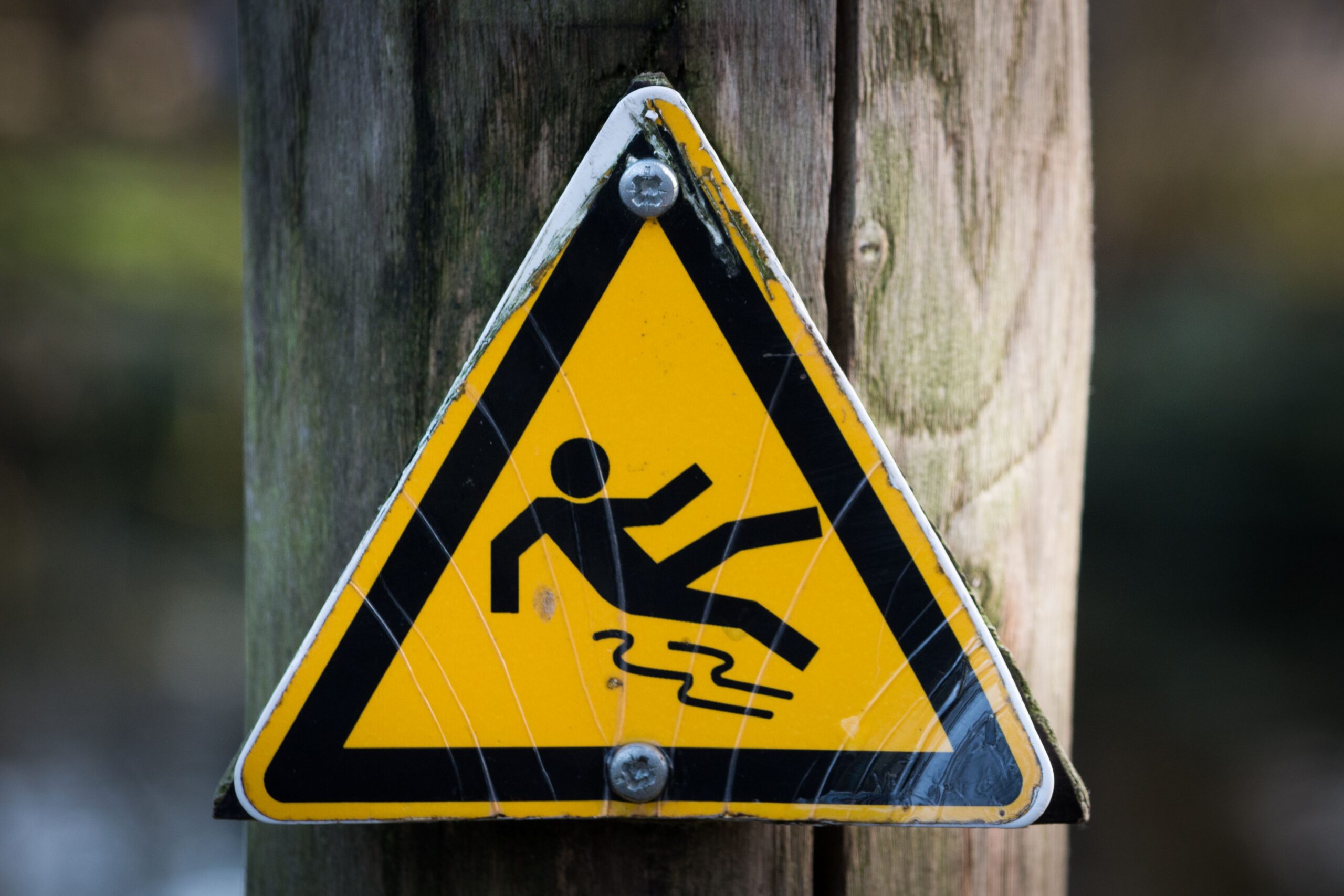
On low-slope roofs — a slope of 4 inches in 12 or less — OSHA permits alternative systems where conventional fall protection is infeasible. A safety monitor is a competent person whose only job is to recognize and warn workers approaching a fall hazard. A controlled access zone restricts entry to only the workers performing the task, with access controlled by the safety monitor. A warning line system marks the safe work area: rope, wire, or chain rigged 34–39 inches high, flagged at least every 6 feet, on stanchions that withstand 16 pounds of lateral force before tipping, kept at least 6 feet back from the roof edge. Our course teaches when these systems are permitted — and when they are not.
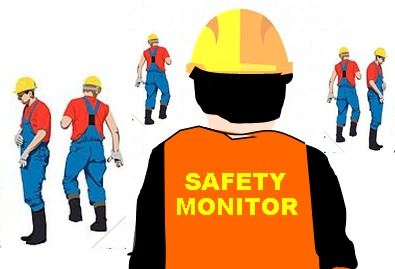
From the Aggie Safety course: the safety monitor — a competent person whose only job is watching and warning.
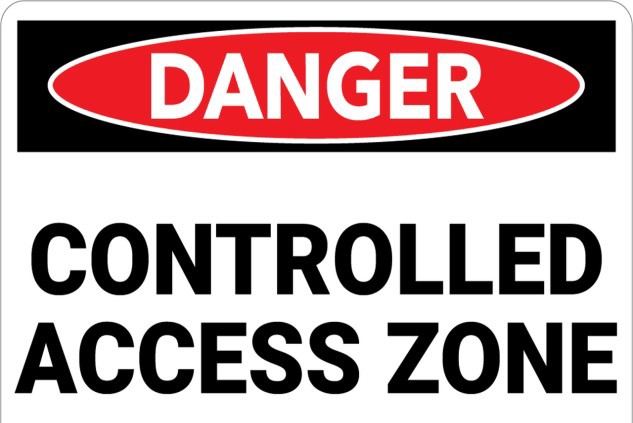
From the course: controlled access zones restrict entry to the workers performing the task.
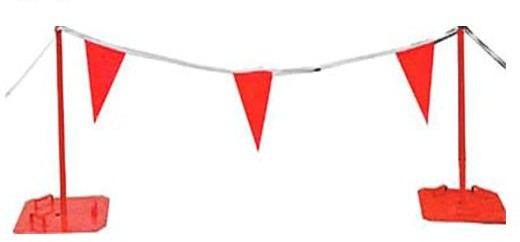
From the course: warning line flags mark the safe work area — flagged every 6 feet, at least 6 feet from the edge.
Our fall protection course covers every major topic required by OSHA 1926.503 and 1910.30, delivered in a clear, practical format designed for field workers.
Each piece of fall protection equipment has specific requirements under OSHA standards. Our training covers all of them: Full-Body Harness, Lanyards, Self-Retracting Devices, Anchors & Lifelines, and Rope Grabs.
Self-retracting lanyards work like a car seat belt — start to fall and they lock, arresting the fall within about 2 feet. But not every SRL is rated for roof and beam work. A Leading-Edge SRL is built so the lifeline is not cut or destroyed when it strikes the edge of a roof or steel beam during a fall. If your anchor is at foot level or your line can contact an edge, a standard Class A SRL is the wrong device — a distinction most training programs skip and ours tests.
| Lanyard Type | How It Works | Critical Limit |
|---|---|---|
| Shock-absorbing | Allows up to a 6-ft free fall, then arrests over ~3.5 ft as the shock pack deploys | Never use when anchor-to-ground clearance is under 18.5 ft; never in a boom lift — total fall distance can reach 9.5 ft |
| Restraint | Fixed length that physically prevents you from reaching the fall hazard | Required in boom lifts — you are kept inside the basket, not caught after ejection |
| Self-retracting (SRL) | Locks like a seat belt; arrests within ~2 ft | Anchor must be overhead; SRL-specific training required before use |
Every anchor and every vertical lifeline must withstand 5,000 pounds, and the anchor belongs directly above the worker — never within 6 feet of the roof edge. Never work more than 4 feet to either side of your anchor: beyond that, a fall becomes a pendulum swing, and you strike the structure at nearly the same speed you would hit the ground.

A worker in a harness after a fall is NOT safe — suspension trauma can cause death within 20 minutes. Every worksite with fall protection must have a documented rescue plan.
A worker hanging in a harness has roughly 20 minutes before suspension trauma becomes life-threatening: blood pools in the legs, return flow to the heart drops, and the worker passes out — shock can set in within 3 minutes.
Our course teaches the response sequence: call 911 in every suspension event, have the worker move their legs, and deploy a Suspension Trauma Safety Strap (STS) — or a short loop of rope — so the worker can stand up in the harness and relieve pressure on the blood vessels while the rescue is rigged.

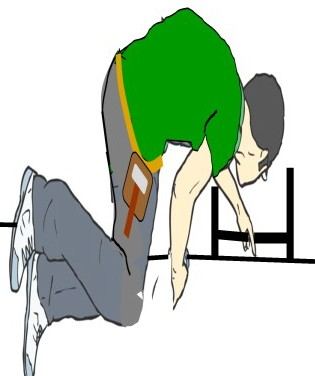
After the rescue: harness off fast, victim in the seated "huddle" position — never laid flat, never allowed to stand, eat, or drink — kept warm, oxygen if available, and every victim goes to a medical facility even if they look fine.
Self-retracting lanyards work like a car seat belt — start to fall and they lock, arresting the fall within about 2 feet. But not every SRL is rated for roof and beam work. A Leading-Edge SRL is built so the lifeline is not cut or destroyed when it strikes the edge of a roof or steel beam during a fall. If your anchor is at foot level or your line can contact an edge, a standard Class A SRL is the wrong device — a distinction most training programs skip and ours tests.
A large portion of the construction and industrial workforce in Texas is Spanish-speaking. OSHA requires that training be conducted in a language and vocabulary each worker can understand. Aggie Safety delivers the full fall protection course in Spanish — same content, same certificate, same compliance.

