OSHA Compliance & Support | Safety Inspections – Safety Audits | Cost-Effective Safety Consulting

Online Rough Terrain Crane Safety Training

$49.95

~45 minutes English & Spanish Instant printable certificate

Rough terrain cranes work where the ground is worst — slopes, soft soil, and unimproved sites — which is exactly why stability and setup discipline decide every lift. Our online rough terrain crane training covers crane stability, pre-use inspection, the basics of rigging, and operator and driver guidelines, followed by a written test. Typical duration: 45 minutes.

🎁 Includes a FREE Operator Evaluation Checklist and Inspection Checklist — everything your employer needs for the hands-on portion.
  • Covers stability, outrigger setup, load charts, and rigging basics
  • Power line clearance rules per OSHA 29 CFR 1926.1408
  • Accepted in all states — 100% online course
  • Instant, printable Certificate of Completion
Certify Your Team Today. — Get Rough Terrain Crane Safety and OSHA Compliant

~42

crane-related worker deaths per year in the U.S. (2011–2017 average)
Source: BLS Census of Fatal Occupational Injuries

32%

of crane fatalities involve overhead power line electrocution — the leading single cause
Source: OSHA / NIOSH crane studies

10 ft

minimum clearance from power lines up to 50 kV — more as voltage rises
Source: 29 CFR 1926.1408
The Process

How It Works

Complete the online course at your own pace, pass the written test, and download your Certificate of Completion immediately.

STEP 1

Enroll & Start Your Online Course

  • Purchase the course and get instant access.
  • No prior rough terrain crane experience needed.
  • Learn OSHA safety rules, hazard recognition, and compliance requirements — all online.
  • This online course covers the formal instruction portion.

STEP 2

Pass the Exam & Print Your Certificate

  • Study at your own pace and pass the online test.
  • Retake the test as many times as you need at no extra charge.
  • Immediately download and print your Certificate of Completion.

STEP 3

Apply It On Site

  • Your employer or trainer uses our free Operator Evaluation Checklist and Inspection Checklist to document the practical evaluation.
  • For construction cranes over 2,000 lbs, accredited operator certification (e.g., NCCCO) also applies — see FAQ.

The Risk Is Real

Why Rough Terrain Crane Training Matters

A rough terrain crane is a physics problem on wheels: boom angle, load radius, counterweight, outrigger footing, wind, and ground bearing capacity all interact on every lift. Wet clay bears less than 10 tons per square meter; hard rock bears 200. An operator who cannot read a load chart or evaluate ground conditions is one over-extended boom away from a tip-over.

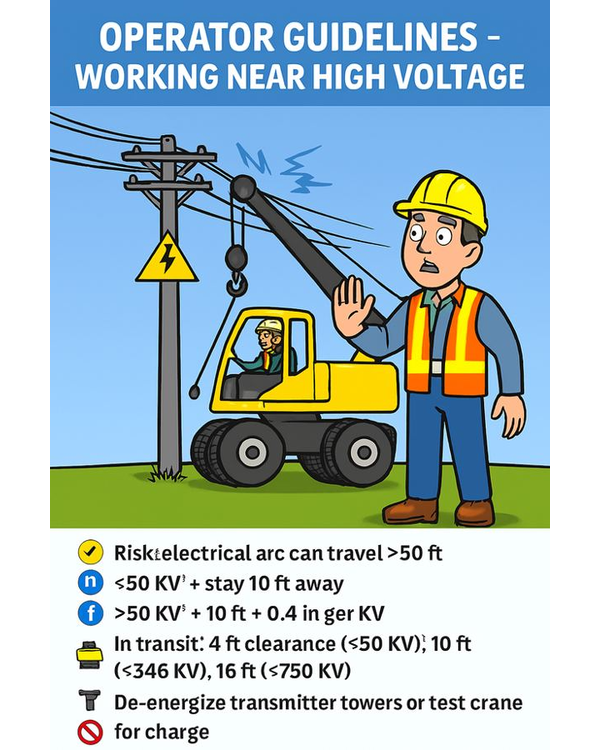
The leading killer in crane work is not collapse — it's electrocution. Roughly a third of crane fatalities involve contact with overhead power lines, which is why OSHA's crane standard (29 CFR 1926 Subpart CC) sets hard clearance distances: 10 feet minimum up to 50 kV, increasing with voltage, and specific in-transit clearances. Our course drills these numbers and the contact procedures that save lives when the worst happens.

The course also covers what most crane incidents trace back to: rigging. Sling inspection, hitch types and their capacity reductions, sling angles, shackles, and eye bolts — a 1/4-inch cut in a sling removes a third of its capacity, and a choker hitch gives up 25% before the lift even starts.

OSHA compliance services Houston
Regulatory note: Under OSHA 29 CFR 1926.1427, operators of most cranes over 2,000 lbs capacity on construction sites must also be certified through an accredited testing organization and evaluated by their employer. This course provides safety training and employer evaluation checklists — see the FAQ for how it fits into the full certification picture.
Technical Deep Dive

Ground Bearing, Clearances, and Sling Capacity

Three tables from the course that answer the three questions every lift starts with: will the ground hold, how close are the lines, and will the rigging carry it?

Ground Type Approximate Bearing Capacity
Hard rock 200 tons/m² — most stable
Shale / sandstone 80 tons/m²
Compacted gravel 40 tons/m²
Asphalt, compacted sand, stiff dry clay 20 tons/m²
Soft clay or loose sand 10 tons/m²
Wet clay under 10 tons/m² — unsafe without engineered support
Power Line Situation Minimum Clearance
Operating, up to 50 kV 10 ft
Operating, over 50 kV 10 ft + 0.4 in per kV above 50
In transit, under 50 kV 4 ft
In transit, up to 345 kV 10 ft
In transit, up to 750 kV 16 ft
Sling Damage / Configuration Capacity Effect
1/8" cut in a sling −27% capacity
1/4" cut −32% capacity
3/8" cut −40% capacity — damaged slings come out of service
Choker hitch −25% vs. vertical rated capacity
Sling angle 60° / 45° / 30° 866 / 707 / 500 lbs on a 1,000-lb basket pair — below 30° is prohibited

Course Outline

What You’ll Learn in This Training

This rough terrain crane training covers the stability, inspection, and rigging fundamentals every operator needs:

✔ Crane stability: center of gravity, the stability box, and counterweight
✔ Boom angle, load radius, and reading safe lift tables
✔ Ground bearing capacity by soil type — from hard rock to wet clay
✔ Outrigger setup: timbers, pads, and bog mats to manufacturer specs
✔ Wind and weather limits, including thunderstorm shutdown
✔ Pre-use crane inspection: controls, hydraulics, boom, rigging, brakes
✔ Hydraulic system hazards — 2,000+ psi injection injuries
✔ Basics of rigging: chain, wire rope, and synthetic sling inspection
✔ Hitch types and capacities: vertical, choker, basket — and sling angles
✔ Shackles, eye bolts, and swivel hoist rings — safe use and inspection
✔ Crane operator guidelines: suspended loads, tag lines, load charts
✔ Power line clearances and electrical contact procedures
✔ Driver guidelines for site travel and driving on public roads
✔ ONLINE WRITTEN TEST

Inside The Course

Straight From the Training Material

These visuals come directly from the Rough Terrain Crane Training course your team will take — practical, field-tested material, not stock theory.
OSHA compliance services Houston

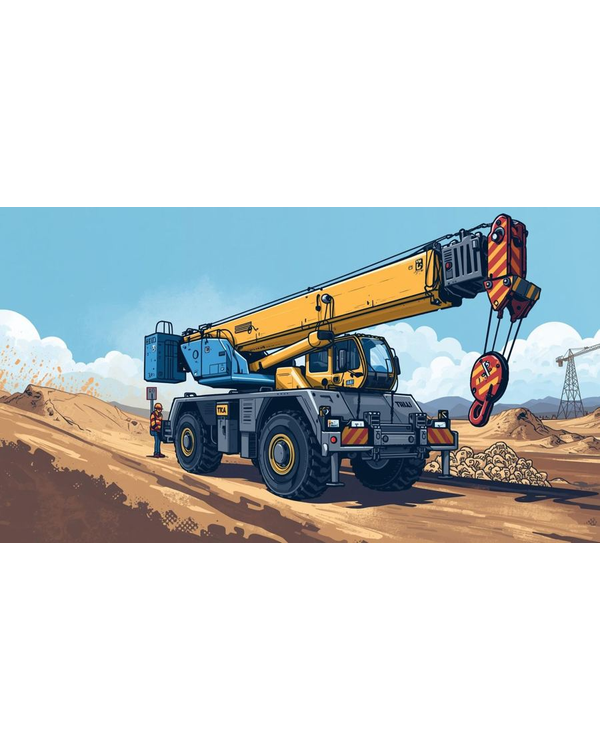
Rough terrain cranes work on slopes and soft soils — setup discipline decides every lift.

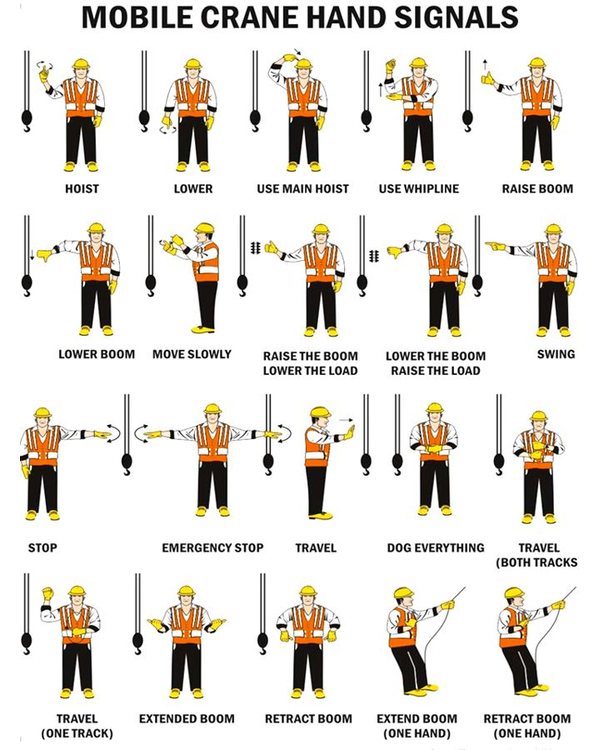
standard mobile crane hand signals — hoist, lower, swing, boom, travel, and emergency stop.

OSHA compliance services Houston

high-voltage rules — electrical arcs can travel over 50 ft; keep 10 ft minimum below 50 kV.

Why Train With Aggie Safety

Benefits of Training with Aggie Safety

Increase safety
Operators learn the engineering behind tip-overs and the clearance rules behind electrocution — the two ways cranes kill.
Protect the lift
Rigging inspection discipline catches the cut sling or bent hook before it drops a load on your crew.
Ensure compliance
Documented safety training plus evaluation and inspection checklists support your obligations under 29 CFR 1926 Subpart CC.
Reduce costs
A single dropped load or power line strike can idle a site for weeks. Training is the cheapest insurance on the jobsite.
Train anywhere
45 minutes online, written test included, certificate printed the same day.
Your Credential

How This Fits Crane Operator Certification

A large portion of the construction and industrial workforce in Texas is Spanish-speaking. OSHA requires that training be conducted in a language and vocabulary each worker can understand. Aggie Safety delivers the full fall protection course in Spanish — same content, same certificate, same compliance.

  • Certificate of Completion — downloadable and printable immediately
  • Operator Evaluation Checklist for the hands-on assessment
  • Crane Inspection Checklist for daily pre-use documentation
  • Free test retakes until you pass
OSHA forklift certification online completion

Frequently Asked questions

Answers to the most common questions about OSHA compliance, safety training, and working with Aggie Safety.
Does this course make me a certified crane operator under OSHA 1926.1427?
Not by itself. For most construction cranes rated over 2,000 lbs, OSHA requires operator certification through an accredited testing organization (such as NCCCO) plus employer evaluation. This course provides the safety training, written test, and the employer evaluation and inspection checklists — the training and documentation layers of the full requirement.
How close can a crane get to power lines?
At least 10 feet from lines up to 50 kV, with greater distances as voltage increases (roughly 10 feet plus 0.4 inches per kV above 50 kV). In transit with the boom lowered, minimums are 4 feet below 50 kV, 10 feet up to 345 kV, and 16 feet up to 750 kV. Electrical arcs can jump — treat these as minimums, not targets.
What should I do if the crane contacts a power line?
Stay on the crane and move the boom away from the line, or have the current shut off. If you must exit because of fire, jump clear with both feet together — never touch the crane and ground at the same time, and never touch downed lines. Keep all other workers away.
What does the course cover on rigging?
The rigging basics every crane operator needs: daily inspection of chains, wire rope, and synthetic slings; removal criteria like three broken wires or a visible wear cord; hitch types and their capacity effects (a choker hitch loses 25%); sling angle math; and the safe use of shackles, eye bolts, and swivel hoist rings.
Why does ground condition matter so much for rough terrain cranes?
Because the crane's stability depends entirely on what its outriggers press against — hard rock bears about 200 tons per square meter while wet clay bears less than 10. The course teaches soil bearing values, when timbers, pads, or bog mats are required, and how a competent person sizes them.
How long is the course?
Most students complete the course in the typical duration listed above. You can start and stop whenever it is convenient — your progress is saved, and there is no time limit to finish.
If I fail the test, do I have to pay to take it again?
No. You may retake the test as many times as you need to pass at no additional charge.
Is your course approved by OSHA?
OSHA does not formally approve any training company or material — it publishes the requirements training must cover. Our rough terrain crane training course is built to meet and exceed those OSHA training requirements.
How quickly do I get proof of completion?
Immediately. As soon as you pass the online test, you can download and print your personalized Certificate of Completion to show your employer.
Do you offer refunds?
Yes. If you purchased within the last 5 days, have not completed the course, and have not generated your certificate, you are eligible for a full refund — no questions asked. Contact our support team at info@lonestar-losscontrol.com with your order details.
Where is the certificate accepted?
The certificate is accepted in all U.S. states, and in any country that follows OSHA-based requirements, including Canada and Mexico.
Aggie Safety Logo
Your safety partner in OSHA compliance and workforce protection.
  • 6001 Savoy Dr Suite #201B, Houston, TX 77036, USA
  • 8AM – 5PM Monday – Friday
© 2026 Aggie Safety | All Rights Reserved.