
$49.95
• ~45 minutes • English & Spanish • Instant printable certificate
Complete the online course at your own pace, pass the written test, and download your Certificate of Completion immediately.
STEP 1
STEP 2
STEP 3
An excavation is any man-made cut in the earth's surface; a trench is an excavation deeper than it is wide, no wider than 15 feet. The distinction matters because trenches are where workers die: walls collapse in seconds, and soil is so heavy that partial burial alone causes fatal crushing injuries. Cave-ins account for three-quarters of excavation deaths — and nearly all of them are preventable with the systems this course teaches.
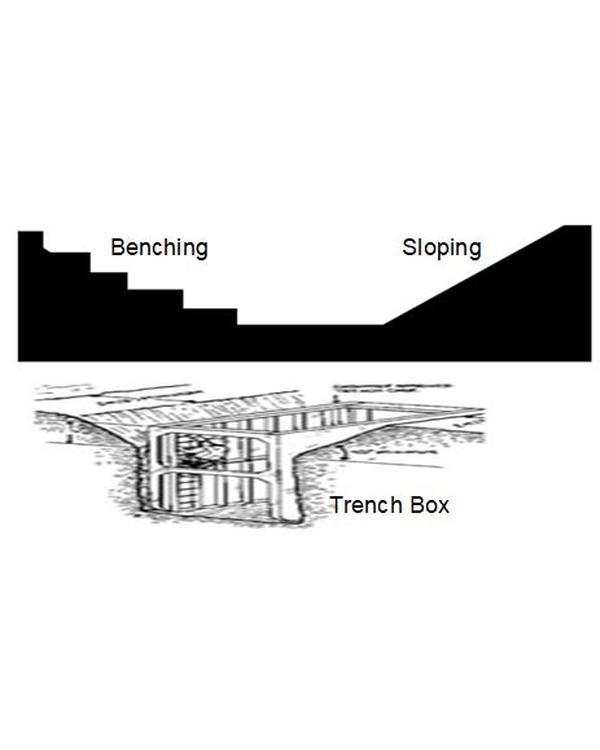
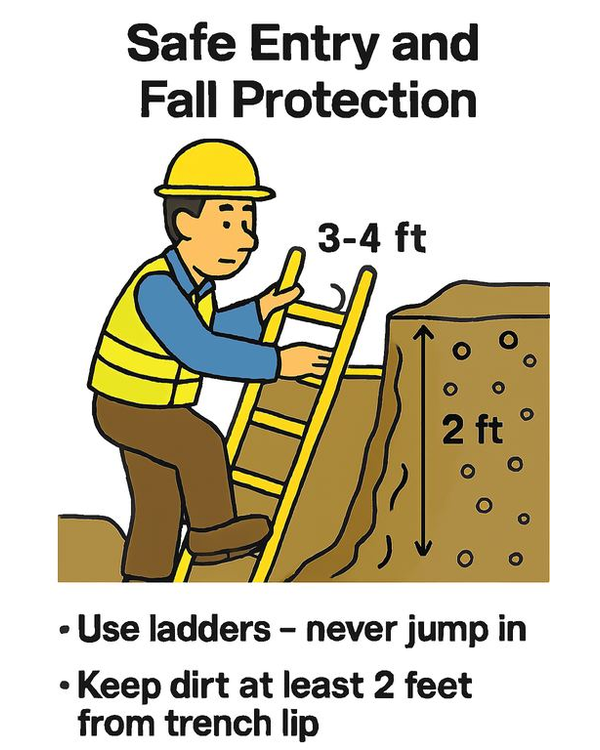
OSHA's excavation standard, 29 CFR 1926 Subpart P, sets bright-line rules: trenches 5 feet and deeper require a protective system (sloping, benching, shoring, or a trench box); trenches deeper than 4 feet require atmospheric testing when hazards may exist; ladders or ramps must be within 25 feet of every worker and extend 3 feet above the edge; spoils and equipment stay at least 2 feet back; a competent person inspects daily and after every rain; and excavations 20 feet or deeper require a registered professional engineer's design.
This training teaches workers to read the trench itself: tension cracks at the edge, bulging walls, water seepage, boiling bottoms, and sloughing faces — the visible symptoms of an excavation about to fail. Workers who can recognize an unsafe trench and refuse entry are the last line of defense when everything upstream has gone wrong.
OSHA Subpart P comes down to a handful of numbers and a soil call. The course drills both.
| Number | Rule |
|---|---|
| 5 ft | Depth at which a protective system (sloping, benching, shoring, or trench box) becomes mandatory |
| 4 ft | Depth at which atmospheric testing is required when hazards may exist |
| 25 ft | Maximum lateral distance from any worker to a ladder, steps, or ramp |
| 3 ft | Minimum ladder extension above the trench edge |
| 2 ft | Minimum set-back for spoil, tools, and equipment from the edge |
| 6 ft | Depth at which fall protection applies to walkways and crossings |
| 20 ft | Depth at which a registered professional engineer must design the protective system |
| Soil Class | Examples | Stability |
|---|---|---|
| Type A | Clay, hardpan, sandy clay | Most stable — but downgraded by water, fissures, vibration, or prior disturbance |
| Type B | Silt, silty loam, sandy loam, angular gravel | Moderately stable |
| Type C | Sand, gravel, loamy sand, submerged or freely draining soil | Least stable — steepest allowed slope is shallowest |
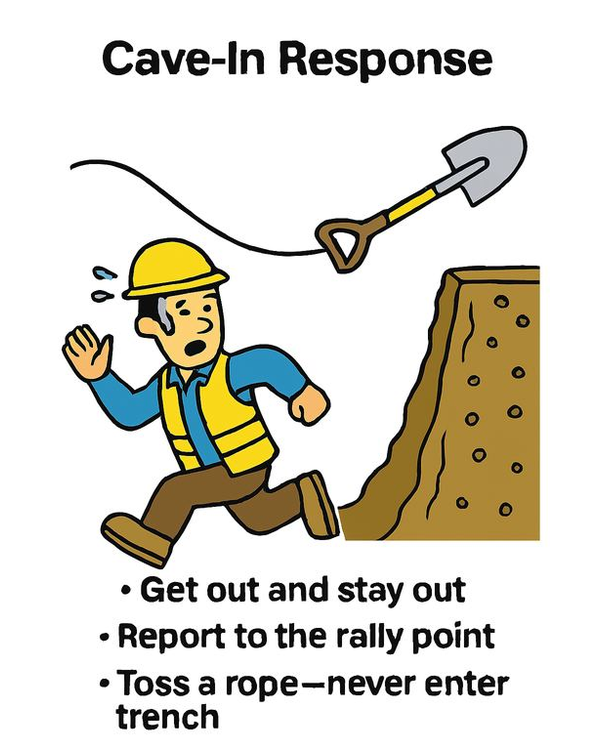
Course rule of thumb on cave-in weight: a single cubic foot of soil is a 12″ box weighing on the order of a hundred pounds — and collapses arrive by the cubic yard, at 3,000+ lbs each. Nobody digs themselves out.
This excavation and trenching training covers OSHA Subpart P from soil mechanics to emergency response:
These visuals come directly from the Excavator Training course your team will take — practical, field-tested material, not stock theory.

This course provides excavation and trenching safety awareness training — the documented baseline OSHA expects for every worker in and around excavations. It teaches workers what the competent person does (daily inspections, soil classification, protective system selection) and what every worker must verify before entering.
On passing the written test, you receive a Certificate of Completion immediately, plus the evaluation and inspection checklists your employer uses to document ongoing trench inspections.

