OSHA Compliance & Support | Safety Inspections – Safety Audits | Cost-Effective Safety Consulting

Fall Protection Training Online with Certificate

Get Now for $24.95

Aggie Safety delivers comprehensive fall protection training that meets 29 CFR 1926.502 (construction) and 29 CFR 1910.28 (general industry) requirements. Completion certificates issued immediately. Available in English and Spanish.

Certify Yourself or Your Team Today.

Get Forklift Certified and OSHA Compliant

  • Certificate Included
  • English & Spanish
  • OSHA Compliant
  • All Industries
  • On-Site Available
Whether you’re an individual needing certification to land a job or a business certifying your team, Aggie Safety makes OSHA compliance simple. Complete in under 1 hour, includes OSHA-required theory + certificate. Save more with bulk training discounts.

Why This Training Matters

Falls Are the Leading Cause of Workplace Fatalities

According to OSHA, falls consistently account for the greatest number of fatalities in the construction industry, and rank among the top causes of serious work-related injuries and deaths across general industry. In 2023 alone, 395 construction workers died from falls — preventable deaths that cost employers millions in fines, liability, and lost productivity.
Aggie Safety's fall protection training program equips workers with the knowledge to identify fall hazards before they cause harm — covering everything from proper harness inspection and anchor requirements to suspension trauma response and aerial lift rescue. Our training is delivered by safety professionals with 100+ years of combined experience across construction, manufacturing, oil & gas, and plant operations.
OSHA compliance services Houston

Key Takeaways

  • OSHA requires fall protection at 4 ft (general industry) and 6 ft (construction)
  • Anchors must withstand a minimum of 5,000 lbs — or twice the maximum intended load
  • A harness that has been in a fall must NEVER be reused
  • Suspension trauma can become fatal within 20 minutes — rescue plans are mandatory
  • All ladders must extend at least 3 feet above the roof or landing surface
  • Shock-absorbing lanyards allow up to 9.5 ft of fall — total clearance must be calculated

OSHA Requirements

When Is Fall Protection Required?

OSHA sets specific height thresholds that trigger mandatory fall protection requirements. Knowing these thresholds is the first step in compliance.

Construction Sites
Fall protection is required when working at or above 6 feet on any construction jobsite — including roofing, framing, steel erection, and excavation work.
General Industry
In manufacturing, warehousing, and plant operations, fall protection is required at 4 feet or more above a lower level — including work platforms, loading docks, and mezzanines.
Scaffolding
Workers on scaffolds require fall protection at 10 feet above the lower level. Scissor lifts with damaged or missing safety rails require fall protection regardless of height.
Boom Lifts
Restraining lanyards are required in all boom lifts regardless of height. A shock-absorbing lanyard must NEVER be used in a boom lift — it can allow a 9.5 ft fall before activation.
High-Risk Surfaces
If the risk of injury is high due to the nature of the surface below — water, machinery, impalement hazards — fall protection is required regardless of the height above.
Floor & Wall Holes
Any hole through which a person could trip or fall must be covered. Covers must be labeled "HOLE," secured from movement, and rated to support twice the maximum load placed on them.
What You'll Learn

Training Modules Covered

Our fall protection course covers every major topic required by OSHA 1926.503 and 1910.30, delivered in a clear, practical format designed for field workers.
Topic What Is Covered
Fall Hazard Recognition Identify leading edges, floor holes, skylights, unprotected wall openings, scaffolds, and elevated work areas before work begins. Understand the difference between fall hazards in construction vs. general industry.
Personal Fall Arrest Systems (PFAS) Full-body harness selection, donning, fit adjustment, and connection to anchor points. Covers body belt prohibitions, front D-ring use, and connecting subsystems correctly.
Lanyards & SRLs Shock-absorbing lanyards (6 ft drop, 3.5 ft arrest), restraining lanyards, and self-retracting lanyards (SRLs/Yo-Yos/Pucks). Proper selection for each work type and height clearance calculations.
Anchor Points & Lifelines Anchor strength requirements (5,000 lbs minimum), positioning above the worker, vertical vs. horizontal lifelines, rope grab use, and prohibited anchorage points — including scaffolds and railings.
Equipment Inspection Pre-use inspection of webbing straps, buckles, D-rings, rope grabs, lanyards, and self-retracting devices. Learn what damage looks like — fraying, UV discoloration, bent metal, cracked buckles, and corrosion.
Guardrail Systems Top rail, mid rail, and toeboard requirements. Rope, wire, and chain guardrail specifications — 34 to 39 inches in height, 6-foot pole spacing, 16-lb lateral load resistance for warning lines.
Safety Nets Installation under competent person supervision, weekly inspection and testing, foreign material removal, and drop distances. When safety nets are a permissible alternative to PFAS.
Suspension Trauma & Rescue Why a suspended worker can die within 20 minutes, recognizing suspension trauma symptoms, immediate 911 protocols, Suspension Trauma Straps (STS), and four rescue methods — ladder, balcony, block & tackle, aerial lift.
Ladder Safety Ladder inspection, correct angle (1:4 rule), extension above roof by 3 feet, three-point contact, weight capacity, step ladder prohibitions, ladder securing, and OSHA fine exposure.
Training Inclusion

Fall Protection Equipment — In Depth

Each piece of fall protection equipment has specific requirements under OSHA standards. Our training covers all of them.
Tabs: Full-Body Harness | Lanyards | Self-Retracting Devices | Anchors & Lifelines | Rope Grabs

Full-Body Harness (PFAS)

The full-body harness is the primary connection between a worker and the fall arrest system. Unlike body belts — which are prohibited for fall arrest — a full-body harness distributes fall forces across the thighs, pelvis, chest, and shoulders, reducing injury risk during arrest.

  • Must be inspected before every use — never use a harness that has been in a fall
  • Check webbing for fraying, cuts, burns, chemical damage, and UV discoloration
  • Check all buckles — no cracks, deformation, or corrosion permitted
  • Check D-rings — no bending, cracking, sharp edges, or rust
  • Verify the label is intact with date of manufacture and last inspection date
  • Keep straps snug — loose straps ride up during a fall and cause serious injury
  • Never store a harness in direct sunlight — UV degrades webbing integrity
OSHA compliance services Houston

Lanyards — Three Types, Three Uses

Selecting the wrong lanyard for the task is a life-safety error. Each lanyard type has a specific application, and mixing them up — particularly in boom lifts — can be fatal.

  • Shock-Absorbing Lanyard: Allows a 6 ft free fall, then arrests over 3.5 ft — total distance 9.5 ft. Requires 18.5 ft minimum clearance below anchor to ground. Do NOT use in boom lifts.
  • Restraining Lanyard: Keeps the worker in a fixed position — no free fall permitted. Required in all boom lifts. Used on flat roofs to prevent reaching the edge.
  • Twin-Leg (100% Tie-Off) Lanyard: Two legs allow continuous connection when moving — one leg always attached. Required where 100% tie-off is mandated.
  • Rope must withstand a minimum of 5,000 lbs and be OSHA-approved
  • Inspect for cuts, abrasion, chemical exposure, and hardware defects before each use
  • Never connect an SRL to another lanyard — the braking system will not activate correctly

Anchor Points & Lifelines

An anchor is only as strong as the structure it is attached to. Selecting an inadequate anchor point is one of the most common — and most fatal — errors in fall protection. OSHA is explicit: if the anchor fails, the fall arrest system fails.

  • Anchor must withstand a minimum of 5,000 lbs — or twice the maximum arresting force if engineered
  • Anchor must be positioned directly above the worker — never to the side beyond 4 feet
  • Never anchor to scaffolding, railings, or any structure not designed as an anchor point
  • Never place an anchor within 6 feet of the roof edge
  • Vertical lifelines: rope or cable rated to 5,000 lbs; use with a rope grab device
  • Horizontal lifelines: engineered systems spanning two anchor points — require design by a qualified person
  • Safety lines must be inspected for broken fibers, fraying, thin sections, and cable strand breaks
OSHA compliance services Houston

Rope Grab

A rope grab is used with a vertical safety lifeline. As the worker moves up or down, they manually reposition the rope grab along the line. In a fall, the rope grab automatically engages the lifeline to stop the fall.

  • Must be compatible with the specific rope diameter it is used on
  • Inspect for cracks, wear, and corrosion on all metal components
  • Verify locking mechanism engages and releases properly
  • Check springs for damage or loss of tension
  • All parts must move freely without hesitation or binding
  • Check for damaged, rusted, or missing rivets
  • The safety line connected to the rope grab must withstand 5,000 lbs
  • If any defects are found — do not use. Report to supervisor immediately

Trusted by Safety Leaders Across Critical Industries

Real results from companies who rely on Aggie Safety to reduce risk, pass OSHA reviews, and protect their workforce.

Shawlee from Nevada

Forklift Training Student

★★★★★

"They walk you through the videos and questionnaire at the same time, so you can go back if you need to. It's really helpful."

Johnny from Texas

Forklift Training Student

★★★★★

"Overall the process was very straightforward. The lessons are short, clear, and easy to follow, even if you've never done forklift training before..." Read more

Gloria from Texas

Forklift Training Student

★★★★★

"This is an easy training everyone should get under their belt for more experience in the working industry."

Dejae from Arizona

Forklift Training Student

★★★★★

"Aggie Safety's Forklift training course was really helping. I'm sure when I take my hands on course in person I'll pass it with flying colors."

Earl from Texas

Forklift Training Student

★★★★★

"The certification process was clear, engaging, and practical. The instructors were knowledgeable and supportive..." Read more

Shawlee from Nevada

Forklift Training Student

★★★★★

"They walk you through the videos and questionnaire at the same time, so you can go back if you need to. It's really helpful."

Johnny from Texas

Forklift Training Student

★★★★★

"Overall the process was very straightforward. The lessons are short, clear, and easy to follow, even if you've never done forklift training before..." Read more

Gloria from Texas

Forklift Training Student

★★★★★

"This is an easy training everyone should get under their belt for more experience in the working industry."

Dejae from Arizona

Forklift Training Student

★★★★★

"Aggie Safety's Forklift training course was really helping. I'm sure when I take my hands on course in person I'll pass it with flying colors."

Earl from Texas

Forklift Training Student

★★★★★

"The certification process was clear, engaging, and practical. The instructors were knowledgeable and supportive..." Read more

Pre-Use Inspection

Fall Protection Equipment Inspection Checklist

OSHA requires inspection of all fall protection equipment before each use by the competent person or authorized user. This checklist covers the critical points from 29 CFR 1926.502.

Webbing & Straps
  • Inspect for fraying, cuts, or tears in webbing
  • Check for badly stretched or pulled webbing
  • Look for loose or broken stitching at connection points
  • Check for discoloration from UV exposure or chemicals
  • Ensure all straps are properly routed and not twisted
Buckles & Metal Hardware
  • Check buckles for cracks, corrosion, or deformation
  • Verify buckles engage and release properly
  • Inspect D-rings for bending, cracking, or sharp edges
  • Check for rust on any metal components
  • Confirm label is intact with inspection date
Lanyards & SRLs
  • Inspect snap hooks for proper latch engagement
  • Check shock pack indicator — has it deployed?
  • Inspect rope/webbing for abrasion or chemical damage
  • Verify SRL retracts and locks smoothly under load
  • Check SRL housing for cracks or damage
Rope Grab & Safety Line
  • Check rope grab locking mechanism function
  • Inspect springs for damage or loss of tension
  • Verify all parts move freely without binding
  • Inspect safety line for broken fibers or fraying
  • Check for thin sections indicating internal fiber damage

If You Find ANY Defect — Do Not Use The Equipment

Remove it from service immediately, tag it, and report it to your supervisor. Using damaged fall protection equipment is the same as having no fall protection at all. OSHA citations apply to the employer and the competent person who authorized its use.

Safety Rules

Fall Protection Safety Guidelines

These are the core rules every worker must know and follow — drawn from OSHA 1926.502 and the training requirements of 1926.503.

General Work Rules
  • Receive fall protection training before working anywhere fall protection is required — not after your first day on the job.
  • Read the manufacturer's manual for every piece of fall protection equipment you use — requirements vary by device.
  • Inspect all fall protection equipment before each use. Do not rely on previous inspections.
  • Use the right lanyard for the job — restraining lanyards in boom lifts, shock-absorbing for general tie-off.
  • When wearing an SRL, the anchor point must always be above your head — never at or below D-ring level.
  • All holes in floors, roofs, and walls must be covered — labeled "HOLE," secured, and load-rated.
Anchor & Roof Rules
  • Never place an anchor within 6 feet of the edge of a roof — this does not provide adequate arrest distance.
  • Never work more than 4 feet from either side of your anchor — the pendulum effect during a swing-fall can be fatal.
  • Use the right anchor for the job — scaffolding, handrails, and ladders are NOT approved anchor points.
  • Never attach an SRL to another lanyard — the braking system will not stop the fall within 2 feet.
  • Calculate total fall clearance before tying off — anchor height, lanyard length, deceleration distance, and worker height must all fit within available clearance above the lower level.
  • Do not use a shock-absorbing lanyard when the distance from anchor to ground is less than 18.5 feet.

OSHA Fine Reference — Fall Protection Violations

Ladder not extending 3 ft above roof
$1,500 – $4,000
Using a damaged ladder (not removed from service)
$3,000 – $5,000
No fall protection at required height
Up to $15,625 per violation
Willful or repeat fall protection violations
Up to $156,259 per violation
Rescue Protocol

Suspension Trauma & Rescue Procedures

A worker in a harness after a fall is NOT safe — suspension trauma can cause death within 20 minutes. Every worksite with fall protection must have a documented rescue plan.

⚠ What Is Suspension Trauma?

When a worker is suspended motionless in a harness after a fall, blood pools in the legs. The heart shrinks, blood pressure drops, and the worker can lose consciousness and die — within as little as 20 minutes. This is why the rescue plan must be pre-planned, not improvised after a fall.

Recognize these symptoms immediately
Nausea
Heavy Sweating
Fast / Difficult Breathing
Increased Heart Rate
Pale / Cold Skin
Hot Flashes
Dizziness / Faintness
Elevated Blood Pressure
Step 1
Free Scoping Call

Tell us about the challenge or project. We identify which engineering discipline applies and whether the deliverable requires a PE stamp.

1
2
Step 2
Proposal and Scope Definition

You receive a written proposal covering deliverables, timeline, and engagement type — either hourly consulting or a fixed-scope project.

Step 3
Engineering Work

Our team executes the analysis, design, calculations, CAD production, or on-site evaluation depending on the discipline involved.

3
4
Step 4
Deliverable Review

You review draft deliverables and we revise based on your feedback.

Step 5
Final Delivery

You receive completed drawings, reports, stamped documents, or factory test results — ready to use.

5
Ladder Rescue
Requires multiple workers — two or more to hold the ladder, additional personnel to assist the victim down. Ensure the ladder is in good condition and long enough before beginning. Have the victim support themselves if conscious.
Balcony / Window Rescue
A boat hook or snagging device may be needed to bring the victim within reach. All rescuers must be tied off. A sharp knife must be available to cut webbing if needed — include a cutting instrument in every rescue kit.
Aerial Lift Rescue
Select the correct lift type for the terrain — off-road conditions require a lift rated for unpaved surfaces. Coordinate with the lift operator before beginning. Rescuers on the lift platform must be tied off. Have snagging equipment ready before approach.
Ladder Safety

Ladder Safety — The Details That Prevent Falls

Ladder incidents account for a significant portion of fall-related fatalities and injuries. These requirements are covered in OSHA 29 CFR 1926.1053.

Electrocution Hazard Near Power Lines
Use fiberglass or wood ladders only when there is any risk of electrocution. Aluminum and metal ladders conduct electricity.
Inspect Before Every Use
Check rungs, side rails, feet, and hardware. Verify the weight capacity label. Never use a damaged ladder — take it off the jobsite. OSHA fine: $3,000–$5,000.
Correct Setup Angle — The 4:1 Rule
The base must be placed 1 foot away from the structure for every 4 feet of rise. On soft ground, use a large board under the feet and stake the feet to prevent sliding.
Ladder Quick-Reference
The ladder must extend at least 3 feet (preferably 7 feet per manufacturer recommendation) above the roofline. A ladder that doesn't extend above the roof lacks a handhold for transition — OSHA fine: $1,500–$4,000.
Three-Point Contact at All Times
Two hands and one foot, or two feet and one hand — always maintain three contact points on the ladder. Do not carry tools or materials while climbing; use a tool belt or hoisting line.
One Person at a Time
Only one person may use the ladder at a time. Do not stand on the top rung or top cap of a step ladder — use a taller ladder if you cannot reach without doing so.
Ladder Safety — The Details That Prevent Falls
Minimum extension above roof 3 ft (7 ft recommended)
Setup angle base rule 1 ft out per 4 ft rise
Max users at one time 1 person only
Contact points required 3-point contact
OSHA fine — short ladder $1,500 – $4,000
OSHA fine — damaged ladder in use $3,000 – $5,000
Step ladders on soft ground Board + stake feet
Step ladder use as straight ladder PROHIBITED
✓ DO
✓ Inspect before every use
✓ Secure the top and feet
✓ Post warning signs at doors
✓ Keep centered on rungs
✓ Face the ladder when climbing
✗ DO NOT
✗ Overreach or lean sideways
✗ Climb while carrying tools
✗ Stand on top two rungs
✗ Use step ladder as straight ladder
✗ Place on soft/uneven ground
Regulatory Standards

OSHA & ANSI Standards — Fall Protection

Aggie Safety training is built on these federal standards. Our instructors ensure your workforce understands each requirement and how it applies to your specific industry.

Standard Scope Aggie Safety Support
29 CFR 1926.502 Fall protection systems criteria and practices for construction — guardrails, PFAS, safety nets, positioning devices, and warning lines Training, system design review, competent person designation
29 CFR 1926.503 Training requirements for fall protection in construction — initial training, retraining, and certification requirements for workers and competent persons Initial and retraining programs, certificate issuance, documentation
29 CFR 1910.28 Duty to have fall protection and falling object protection for general industry — walking-working surfaces including floors, stairs, docks, and elevated platforms Gap assessment, training, compliance program development
29 CFR 1910.29 Fall protection systems and falling object protection criteria for general industry — system specifications and performance requirements System selection guidance, hazard assessment, training
29 CFR 1910.30 Training requirements for walking-working surfaces and fall protection in general industry — certification and documentation requirements Online and on-site training, bilingual delivery, recordkeeping
29 CFR 1926.1053 Ladder safety requirements for construction — portable ladder design, setup, use, and inspection requirements Ladder safety training, inspection checklists, competent person training
ANSI/ASSE Z359 Fall Protection Code — comprehensive voluntary consensus standards for fall protection equipment design, performance, and inspection Equipment selection guidance, manufacturer compliance verification
29 CFR 1926.451 Scaffold safety — fall protection requirements for scaffold workers at 10 feet or above, including guardrails and personal fall arrest Scaffold safety training, competent person program
Program Features

Why Choose Aggie Safety for Fall Protection Training

We've trained workers across construction, manufacturing, oil & gas, roofing, and plant operations throughout Texas.

Certificate on Completion
Printable OSHA-compliant completion certificate issued immediately upon passing the assessment. Accepted by employers across Texas and beyond.
English & Spanish
Full training course available in both English and Spanish — the same high-quality content in both languages, no shortcuts in the Spanish version.
Online — Anytime
Complete training on any device at any time. No scheduling delays. Workers finish before the next shift. Employer portal available for group enrollment tracking.
On-Site Option
Prefer hands-on instruction? Our safety professionals deliver on-site fall protection training with live equipment demonstrations at your facility.
Industry-Specific Content
Training scenarios drawn from construction, roofing, manufacturing, oil & gas, and plant operations — not generic content adapted from another industry.
Competent Person Training
OSHA requires a designated "competent person" for fall protection oversight on construction sites. We train and certify competent persons per 29 CFR 1926.32(f).
Retraining Programs
OSHA requires retraining when a worker's behavior indicates inadequate understanding, or when new equipment or fall hazards are introduced. We handle it.
Recordkeeping Support
Training records are maintained and available for OSHA inspection. We provide documentation that satisfies 1926.503(b) written certification requirements.

Training Available in English & Spanish

A large portion of the construction and industrial workforce in Texas is Spanish-speaking. OSHA requires that training be conducted in a language and vocabulary each worker can understand. Aggie Safety delivers the full fall protection course in Spanish — same content, same certificate, same compliance.

OSHA forklift certification online completion

Frequently Asked questions

Answers to the most common questions about OSHA compliance, safety training, and working with Aggie Safety.
Who is required to receive fall protection training under OSHA?
Any worker who could be exposed to fall hazards must be trained. Under 29 CFR 1926.503 (construction), the employer must provide training to each employee who might be exposed to fall hazards. Under 29 CFR 1910.30 (general industry), training is required for each employee who could be exposed to fall hazards on walking-working surfaces. Training must be done before the worker begins work in the area where fall hazards exist.
How often does fall protection training need to be repeated?
OSHA does not specify a fixed retraining interval. However, retraining is required when: (1) the employer believes the worker lacks adequate understanding of fall protection requirements; (2) changes in the workplace make previous training obsolete; or (3) changes in fall protection systems or equipment make previous training obsolete. Many employers conduct annual refresher training as a best practice to stay ahead of OSHA scrutiny.
Can online training satisfy OSHA's fall protection training requirement?
Yes — online training can satisfy the knowledge-based components of OSHA's fall protection training requirement. OSHA has confirmed that online or computer-based training is acceptable as long as it covers all required topics, is interactive, and workers can ask questions. For equipment-specific training (e.g., SRLs or specific harness systems), hands-on demonstration is strongly recommended and may be required by some employers or general contractors. Aggie Safety offers blended options combining online and on-site components.
What is a "competent person" for fall protection, and do I need one?
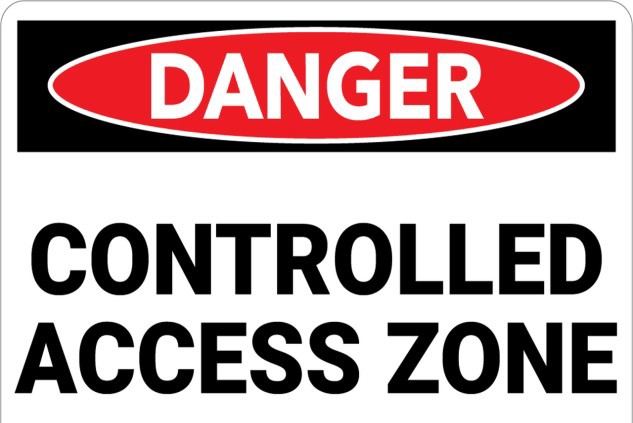
OSHA defines a competent person as someone capable of identifying existing and predictable fall hazards and who has the authority to correct them. On construction sites, OSHA requires a competent person to supervise specific fall protection activities — including safety net installation, controlled access zones, and certain roof work. If you have workers on a construction site, you likely need a designated competent person. Aggie Safety provides competent person training and certification.
What happens when a worker is suspended in a harness after a fall?
Suspension trauma is a life-threatening emergency. A motionless worker suspended in a harness can lose consciousness and die within as little as 20 minutes as blood pools in the legs and the cardiovascular system is compromised. Call 911 immediately in every suspended-worker event. Encourage the worker to move their legs. Use a Suspension Trauma Strap (STS) if available. Your worksite must have a rescue plan in place before work begins — not improvised after a fall.
Can I reuse a harness after it has been in a fall?
A harness that has arrested a fall must be removed from service immediately — even if it shows no visible damage. The fall forces may have compromised the internal fiber structure of the webbing in ways that are not visible to the naked eye. Tag the harness "DO NOT USE," report it to your supervisor, and replace it. This applies to lanyards, shock absorbers, and SRLs as well — any component that has arrested a fall must be taken out of service.
Aggie Safety Logo
Your safety partner in OSHA compliance and workforce protection.
  • 6001 Savoy Dr Suite #201B, Houston, TX 77036, USA
  • 8AM – 5PM Monday – Friday
© 2026 Aggie Safety | All Rights Reserved.