OSHA Compliance & Support | Safety Inspections – Safety Audits | Cost-Effective Safety Consulting

Online Confined Space Training — OSHA Compliant

$44.95

~30 minutes English & Spanish Instant printable certificate

A confined space is any area with limited entry and exit that is not designed for continuous occupancy — tanks, silos, manholes, pits, and vaults. The atmosphere inside can turn lethal without warning, and the hazards are invisible. Our confined space training online teaches workers what OSHA requires them to know before entry: permit vs. non-permit classification, atmospheric testing, ventilation, and rescue. Typical duration: 30–40 minutes, followed by a written test.

⚠️ More than half of confined space fatalities are would-be rescuers — untrained workers who entered to help a downed coworker. This training exists to break that chain.
  • Aligned with OSHA 29 CFR 1910.146 and 1926 Subpart AA training requirements
  • Covers entrant, attendant, and entry supervisor responsibilities
  • Accepted in all states — 100% online course
  • Instant, printable Certificate of Completion
Certify Your Team Today. — Get Confined Space Safety and OSHA Compliant

92

workers killed in confined space incidents on average every year — nearly two per week
Source: BLS Census of Fatal Occupational Injuries

60%

of confined space fatalities are would-be rescuers who entered without training or equipment
Source: NIOSH

2.1M

U.S. workers enter permit-required confined spaces each year
Source: OSHA
The Process

How It Works

Complete the online course at your own pace, pass the written test, and download your Certificate of Completion immediately.

STEP 1

Enroll & Start Your Online Course

  • Purchase the course and get instant access.
  • No prior confined space experience needed.
  • Learn OSHA safety rules, hazard recognition, and compliance requirements — all online.
  • This online course covers the formal instruction portion.

STEP 2

Complete the Course & Download Your Certificate

  • Study at your own pace and pass the online test.
  • Retake the test as many times as you need at no extra charge.
  • Immediately download and print your Certificate of Completion.

STEP 3

Site-Specific Assignment With Your Employer

  • Your employer applies your training to its specific spaces, permit system, and rescue plan.
  • You are now prepared for assignment to entrant, attendant, or entry supervisor duties with site-specific instruction.

The Risk Is Real

Why Confined Space Training Matters

Confined space atmospheres kill quickly and invisibly. Oxygen deficiency causes unconsciousness in seconds; hydrogen sulfide and methane accumulate in sewers, manholes, and tanks; engulfment in loose material buries workers under crushing weight. Because the hazard cannot be seen, the untrained instinct — climb in and pull your coworker out — is the single deadliest decision in confined space work.

OSHA regulates confined spaces under 29 CFR 1910.146 (general industry) and 29 CFR 1926 Subpart AA (construction). Both standards require that entrants, attendants, and entry supervisors be trained before assignment, that the atmosphere be tested before and during entry, and that a rescue plan exist before anyone goes in — not after something goes wrong.

Our confined space training covers the full entry system: how spaces are classified as permit-required or non-permit, what an entry permit must document, how to test the atmosphere in layers from the lip to the bottom, how to size and position blower ventilation, and what entry and non-entry rescue actually look like.

What kills workers in confined spaces
  • Hazardous atmospheres — oxygen deficiency, toxic gases, flammable vapors (56% of fatalities)
  • Untrained rescue attempts by coworkers
  • No atmospheric testing before or during entry
  • No attendant stationed outside the space
  • Engulfment in grain, sand, sludge, or water
  • Energy sources not locked out before entry
Regulatory note: Permit-required confined space violations are among OSHA's most heavily penalized citations because fatalities so often involve multiple victims. 2026 maximums: $16,550 per serious violation, $165,514 per willful or repeat violation.
Technical Deep Dive

Sizing Ventilation for a Confined Space

The course teaches the actual blower math and duct placement rules — here is the worked example from the training.

Goal: exchange the atmosphere 20 times per hour.

Step Worked Example from the Course
1. Volume of the space Length × Width × Height → 12 ft × 15 ft × 15 ft = 2,700 cubic feet
2. Blower throughput Blower rated 900 CFM → 2,700 ÷ 900 = one exchange every 3 minutes
3. Safety margin 3 min × 1.15 = 3.45 min per exchange
4. Exchanges per hour 60 ÷ 3.45 = 17.4 exchanges/hour — fails the 20/hour requirement; a higher-CFM blower is required
Duct Placement Rule Number
Fresh-air intake distance from exhaust outlet at least 5 ft, and upwind of the opening
Duct outlet from the contaminant source 1 ft
Duct outlet below the breathing zone 1 ft
Duct distance from workers 3 ft
Vertical manhole duct depth ¾ of the way down, within 15 ft of the work area

For combustible atmospheres: pull air out (negative pressure), use grounded, explosion-proof blowers, and eliminate ignition sources downwind. Static risk rises below 50% humidity.

Course Outline

What You’ll Learn in This Training

This confined space training covers the complete OSHA entry framework, drawn directly from our field training program:

✔ What is a confined space — the OSHA definition and real examples
✔ The risks: oxygen deficiency and enrichment, toxic gases, engulfment, entrapment
✔ Permit-required vs. non-permit confined spaces — and reclassification

✔ Permit confined space entry requirements and documentation
✔ Entrant, Attendant, and Entry Supervisor responsibilities
✔ Pre-entry safety checklist: LOTO, barriers, rescue equipment, first aid
✔ Atmospheric testing — layered testing from the lip to the bottom of the space
✔ Continuous air monitoring and the 20-air-exchanges-per-hour rule
✔ Ventilation and hazard control: push vs. pull, blower CFM sizing, duct placement
✔ Preventing recirculation, short-circuiting, and the chimney effect
✔ Emergency response and evacuation
✔ Rescue kit contents and non-entry rescue procedures
✔ Entry rescue procedures — and why untrained rescue kills
✔ ONLINE WRITTEN TEST

Inside The Course

Straight From the Training Material

These visuals come directly from the Confined Space Training course your team will take — practical, field-tested material, not stock theory.
OSHA compliance services Houston

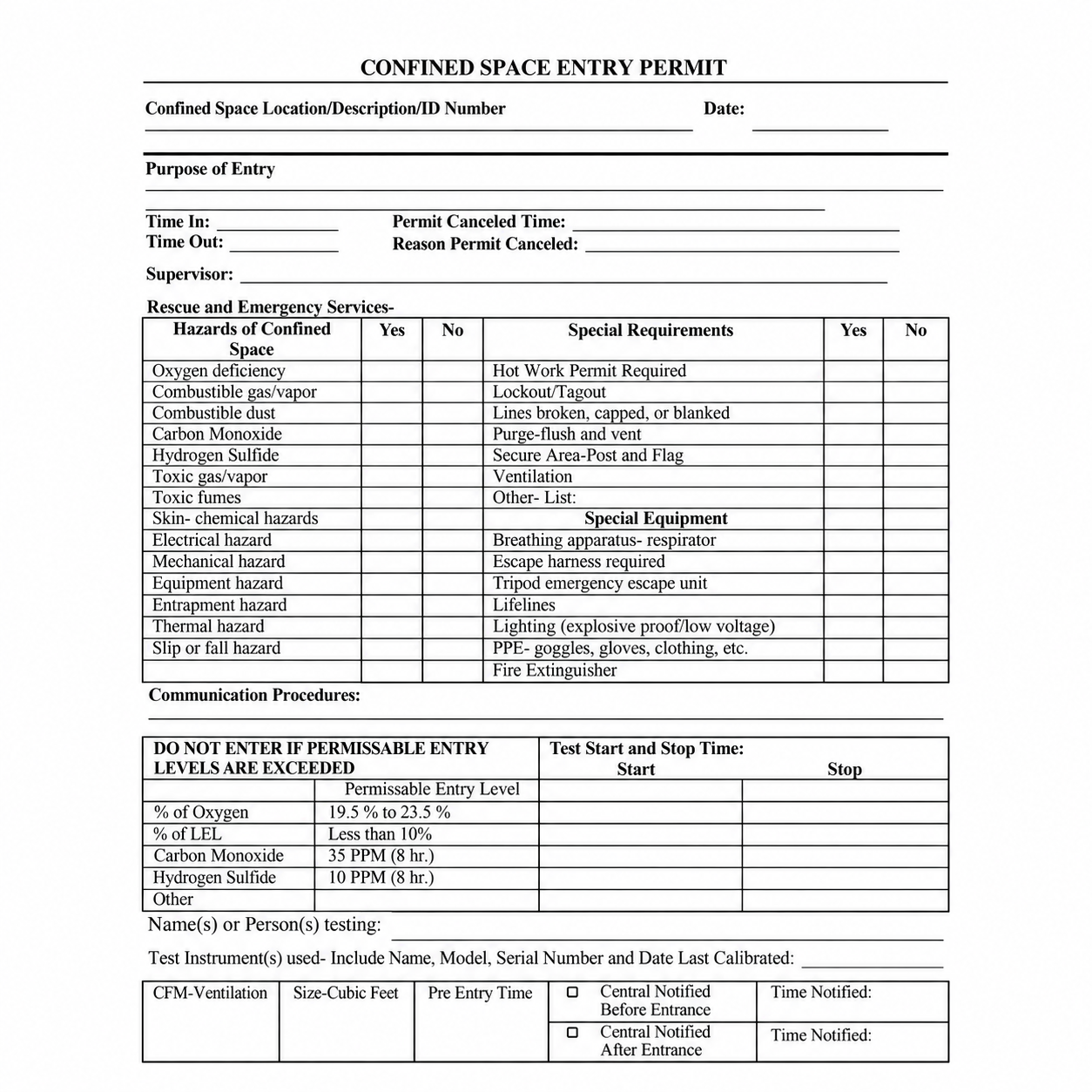
a sample confined space entry permit — hazards, authorized personnel, testing results, and expiration.

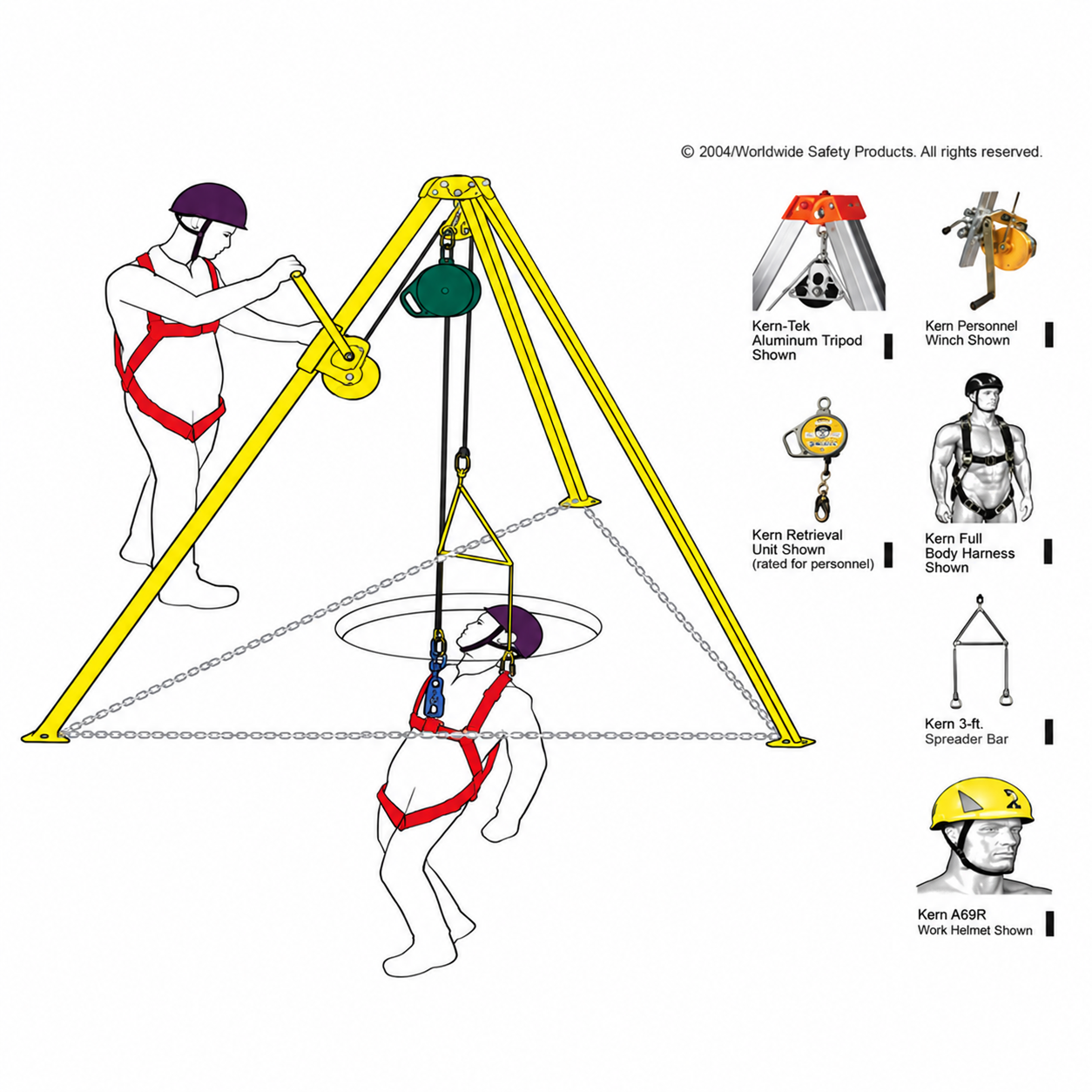
non-entry rescue with a tripod and winch retrieval system — rescue without creating a second victim.

OSHA compliance services Houston

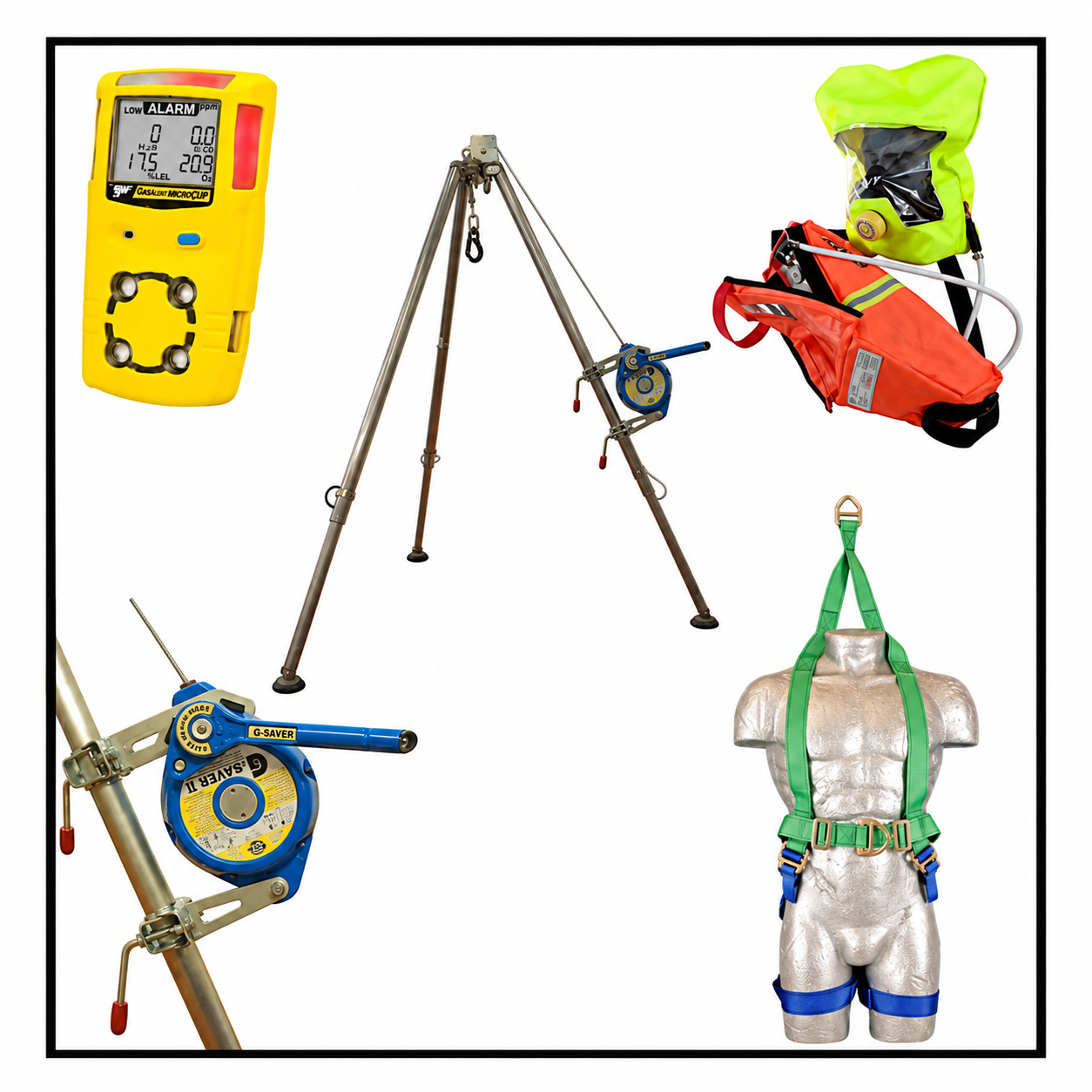
the rescue kit — calibrated atmosphere monitor, tripod, retrieval winch, and full-body harness.

Why Train With Aggie Safety

Benefits of Training with Aggie Safety

Increase safety
Workers learn to treat every manhole, tank, and pit as a tested-first, never-alone entry — the discipline that prevents multi-fatality incidents.
Ensure compliance
Documented training satisfies the training elements of 29 CFR 1910.146 and 1926 Subpart AA before your workers are assigned entry duties.
Protect rescuers
The course drills the hardest rule in safety: never enter to rescue without training and equipment. It saves the second life.
Reduce costs
One confined space incident can trigger OSHA citations, shutdowns, and litigation that dwarf the cost of training an entire crew.
Build competence
Ventilation math, testing sequence, and permit logic — practical skills your crew applies the same day.
Your Credential

Certification That Demonstrates Real Knowledge

On completing the course and passing the written examination, you receive a Certificate of Completion demonstrating basic knowledge of confined space hazards and entry requirements — the documented classroom training OSHA expects before site-specific assignment.

Your employer then applies this foundation to your specific spaces, permits, and rescue plan. That is exactly how OSHA structures confined space competency: general knowledge first, site-specific procedures second.

  • Certificate of Completion — downloadable and printable immediately
  • Documented training record for your employer's OSHA file
  • Free test retakes until you pass
  • Foundation for entrant, attendant, and entry supervisor duties
OSHA forklift certification online completion

Frequently Asked questions

What is a confined space according to OSHA?
A confined space is an area that is large enough to enter and work in, has limited or restricted means of entry and exit, and is not designed for continuous occupancy. Common examples include tanks, silos, storage bins, manholes, tunnels, pipelines, crawl spaces, boilers, and underground vaults.
What is the difference between a permit-required and non-permit confined space?
A permit-required confined space contains, or has the potential to contain, a serious hazard — a hazardous atmosphere, engulfment material, an internal configuration that could trap a worker, or any other recognized serious hazard. Entry requires a written permit, atmospheric testing, an attendant, and a rescue plan. A non-permit space has no such hazards, but must be re-evaluated and reclassified immediately if conditions change.
Does this course make me an entrant, attendant, or entry supervisor?
This course provides the general confined space knowledge OSHA requires for those roles; your employer then assigns the role and provides site-specific training on your facility's spaces, permit system, and rescue plan. The course covers the responsibilities of all three roles so you understand the complete entry system.
Why is atmospheric testing done in layers?
Because gases stratify by density — methane rises, hydrogen sulfide and carbon dioxide sink. OSHA-compliant testing samples at the opening, the top, the middle, and the bottom of the space before entry, and monitoring continues during the entire entry. A safe reading at the top proves nothing about the bottom.
Why shouldn't I enter a confined space to rescue a coworker?
Because the atmosphere that dropped your coworker will drop you too — NIOSH data shows about 60% of confined space fatalities are would-be rescuers. The correct response is non-entry rescue: retrieval lines and winch systems operated from outside, with entry rescue performed only by trained, equipped rescue personnel.
How long is the course?
Most students complete the course in the typical duration listed above. You can start and stop whenever it is convenient — your progress is saved, and there is no time limit to finish.
If I fail the test, do I have to pay to take it again?
No. You may retake the test as many times as you need to pass at no additional charge.
Is your course approved by OSHA?
OSHA does not formally approve any training company or material — it publishes the requirements training must cover. Our silica training course is built to meet and exceed those OSHA training requirements.
How quickly do I get proof of completion?
Immediately. As soon as you pass the online test, you can download and print your personalized Certificate of Completion to show your employer.
Do you offer refunds?
Yes. If you purchased within the last 5 days, have not completed the course, and have not generated your certificate, you are eligible for a full refund — no questions asked. Contact our support team at info@lonestar-losscontrol.com with your order details.
Where is the certificate accepted?
The certificate is accepted in all U.S. states, and in any country that follows OSHA-based requirements, including Canada and Mexico.
Aggie Safety Logo
Your safety partner in OSHA compliance and workforce protection.
  • 6001 Savoy Dr Suite #201B, Houston, TX 77036, USA
  • 8AM – 5PM Monday – Friday
© 2026 Aggie Safety | All Rights Reserved.