Key Takeaways
- A dust explosion needs five things at once: combustible dust, oxygen, an ignition source, dispersion into a cloud, and confinement. The fire triangle covers only the first three. Remove any one of the five and the explosion can’t happen.
- Secondary explosions can be more destructive than the first blast. At Imperial Sugar in 2008, secondary explosions tore through the packing buildings; 14 workers were killed and 36 injured.
- The U.S. Chemical Safety Board counted 281 combustible dust incidents from 1980 to 2005, with 119 workers killed and 718 injured.
- OSHA has no single combustible dust standard. It enforces through the General Duty Clause, standards such as 1910.22, 1910.272, 1910.307 and 1910.1200, and its Combustible Dust National Emphasis Program (CPL 03-00-008).
- Each side of the pentagon has a proven control, and a Dust Hazard Analysis (DHA) under NFPA 660 shows which ones your facility is missing.
What Is a Dust Explosion?
A dust explosion is the rapid burning of fine combustible particles suspended in air inside an enclosed space. The burning is so fast that pressure builds quicker than the room, silo, or dust collector can relieve it, and the enclosure fails. In OSHA’s words, “Any combustible material can burn rapidly when in a finely divided form,” and when suspended in air at the right concentration, “it can become explosible” (OSHA, Combustible Dust).
For a plant manager, the consequence is what matters. A dust explosion rarely stays inside the equipment where it started. It can take out a building, halt production, and bring a fatality investigation and General Duty Clause citations. The chemistry is well understood, and the controls are proven.
Industrial dust explosions are generally deflagrations (a flame front slower than sound that still produces a damaging pressure wave) rather than a dust detonation, and venting, suppression, and isolation are designed around dust deflagration.
The Dust Explosion Pentagon vs. the Fire Triangle
The fire triangle is fuel, heat, and oxygen. A dust explosion needs two more elements, which is why OSHA calls it the dust explosion pentagon: “the four elements for deflagration, plus confinement (enclosure, such as a silo, dust collector, bin, conveyor, bucket elevator, or room)” (OSHA Technical Manual, Section IV, Chapter 6).
| Element | Fire triangle | Dust pentagon | What it looks like in a plant |
|---|---|---|---|
| Fuel | Yes | Yes (combustible dust) | Sugar, flour, grain, starch, plastic powder, wood, aluminum, coal |
| Ignition source (heat) | Yes | Yes | Hot surfaces, sparks, a metal ember in a duct, welding, electrostatic discharge |
| Oxygen | Yes | Yes | Ordinary air |
| Dispersion | No | Yes | A dust cloud above its minimum explosible concentration |
| Confinement | No | Yes | A room, silo, dust collector, duct, bin, or bucket elevator |
The CSB’s Combustible Dust Hazard Study (2006) makes the practical point: take away dispersion or confinement and you may still have a fire, but not an explosion. That’s why so much dust control is about preventing dust accumulation where it can be lofted.
What Makes Combustible Dust Explosive
Not every combustible material is equally dangerous as a dust. A few measured properties decide how easily it ignites and its explosion severity. The reference points below are from OSHA’s Technical Manual; your own dust can only be judged by combustibility testing.
| Property | What it tells you | OSHA reference point |
|---|---|---|
| Particle size distribution | Finer particles have a higher surface area to volume ratio, so they ignite and burn faster | NFPA 660 (which absorbed NFPA 652 in 2025) treats material under 500 microns (about the size of granulated sugar) as a potential flash-fire or explosion hazard |
| Minimum Ignition Energy (MIE) | The smallest spark that ignites a dust cloud | As low as 1 to 3 millijoules for some dusts |
| Minimum Explosible Concentration (MEC) | The lowest dust-in-air concentration that can explode (the dust version of a Lower Explosion Limit, one of the dust cloud flammability limits) | 20 g/m³ to over 250 g/m³ for dusts listed in NFPA standards |
| Kst and Pmax | Kst is the maximum rate of pressure rise, normalized to a 1 m³ volume; Pmax is peak pressure. Together they measure explosion severity and size vents and suppression | OSHA uses 1.5 bar-m/sec as the minimum Kst for an explosion; most dusts fall between 0 and 300 |
| Minimum Ignition Temperature (MIT) | The lowest temperature at which the dust ignites; the cloud value is measured in a heated furnace, the layer value on a hot surface | Tested separately as the minimum ignition temperature of dust clouds and of dust layers |
Explosion pressure development (Pmax, dP/dtmax, and Kst-value) comes from a standard explosibility test, alongside layer ignition temperature testing. Use a lab accredited to ISO/IEC 17025:2017 so results hold up with insurers and inspectors.
Editorial note: Blog 32 (Combustible Dust Testing: Kst, Pmax and MIE) covers testing in depth. Once it’s live, link “combustibility testing” here to it. This section stays short on purpose to avoid cannibalizing it. [REVIEW: remove this editorial note before publishing]
Why Secondary Explosions Do the Most Damage
A secondary explosion turns an equipment fire into a building-wide disaster. OSHA explains that a primary explosion in processing equipment “may shake loose accumulated dust, or damage a containment system (such as a duct, vessel, or collector),” and that this dust, if ignited, “may cause one or more secondary explosions. These can be more destructive than a primary explosion” (OSHA 3371).
The sequence is predictable. A small blast inside a dust collector, duct, or conveyor sends a pressure wave into the room. It knocks accumulated dust off beams, ledges, and ceiling spaces into a far larger cloud, and the flame front ignites it.
Overhead dust matters as much as dust inside equipment. In a 2015 interpretation, OSHA told compliance officers to use NFPA 654’s layer depth method (now carried in NFPA 660): a 1/32-inch layer (for a bulk density of 75 lb/ft³) covering more than 5 percent of the floor area signals a hazard. Lighter dusts allow a deeper layer under NFPA’s formula.
Lessons From CSB Investigations
The U.S. Chemical Safety Board (formally the Chemical Safety and Hazard Investigation Board) has investigated many combustible dust incidents. Two show the pattern clearly.
Imperial Sugar Company, Port Wentworth, Georgia (2008)
On February 7, 2008, sugar dust exploded at the Port Wentworth refinery of Imperial Sugar Company, then headquartered in Sugar Land, Texas, killing 14 workers and injuring 36. The primary explosion started in a steel belt conveyor under two sugar silos. It had been enclosed with steel panels in 2007 with no dust removal or venting added, and sugar dust inside built up above the MEC. Pressure waves then set off massive secondary explosions through the packing buildings. The CSB also found “deep piles of spilled granulated and powdered sugar” despite written cleaning schedules (CSB, Imperial Sugar).
West Pharmaceutical Services, Kinston, North Carolina (2003)
On January 29, 2003, an explosion at West Pharmaceutical Services caused six employee deaths and dozens of injuries. The fuel was fine polyethylene powder that had collected above a suspended ceiling, a space housekeeping never reached. The material safety data sheets also failed to warn of the combustible dust hazard (CSB, West Pharmaceutical Services).
In both cases, the fatal fuel was dust nobody was looking at. After Imperial Sugar, the CSB recommended that OSHA “promulgate a comprehensive standard to reduce or eliminate hazards from fire and explosion from combustible powders and dust.” OSHA has not issued one.
Which Industries in Texas Carry Dust Explosion Hazards
OSHA’s list of at-risk industries includes agriculture, chemicals, pharmaceuticals, furniture, textiles, fossil fuel power generation, recycling operations, and metal working, including additive manufacturing and 3D printing. In the CSB’s 1980–2005 data, food products made up 24 percent of incidents, wood 15 percent, chemicals 12 percent, and primary metals and plastics 8 percent each. OSHA’s 2023 emphasis program revision noted that wood and food products averaged 70 percent of the combustible material involved in 2018 dust fires and explosions. [REVIEW: verify this figure against the CPL 03-00-008 text and cite it]
| Texas industry | Typical dust | Where dust explosion hazards concentrate |
|---|---|---|
| Food processing and bakeries | Sugar, flour, starch, spices | Mixers, sifters, conveyors, packaging |
| Grain handling | Grain dust, feed | Bucket elevators, grain silos, dryers (the classic site of grain dust explosions) |
| Plastics factories and resin producers | Polymer powders and fines | Pneumatic conveying, blenders, bagging |
| Wood products and truss plants | Sawdust, sanding dust | Saws, sanders, dust collection systems |
| Metals and additive manufacturing | Aluminum, magnesium, titanium powders | Grinding, polishing, powder handling |
| Pharmaceuticals and chemicals | Active ingredients, excipients, pigments | Milling, drying, tablet presses |
| Power generation and recycling | Coal dust, shredded plastics and paper | Coal pulverizers, shredders |
Because of grain dust explosions, grain handling has its own OSHA standard, and NFPA 61 has long covered agricultural and food dust hazards. Under 29 CFR 1910.272(j), grain elevators must not allow fugitive dust accumulations over 1/8 inch in priority housekeeping areas (or demonstrate equivalent protection), and 1910.272(f) requires hot work permits. A coal dust explosion in a mine falls under MSHA; coal handling at a plant is OSHA territory.
Common Ignition Sources in Dust Handling
With Minimum Ignition Energy values this low, an ignition source doesn’t need to be dramatic:
- Hot work: welding, cutting, or grinding near dust without a hot work permit and a cleaned area
- Mechanical sparks: a metal ember from tramp metal or a failing bearing, carried into a dust collector
- Electrostatic discharge from static buildup in pneumatic conveying or ungrounded equipment
- Hot surfaces: dryers, motors, and lights above the dust layer’s ignition temperature
- Electrical equipment not rated for a Class II hazardous location (1910.307)
- Smoking: one cigarette butt in a dusty area is enough
Five Ways to Break the Dust Pentagon
Dust explosion prevention takes sides of the pentagon away. Protection limits the damage if prevention fails. A sound program uses both, matched to the risk assessment for each area.
| Pentagon side | Control | What it looks like | Key reference |
|---|---|---|---|
| 1. Fuel | Housekeeping routines and dust control | Written cleaning frequencies that reach overhead and hidden surfaces; routine inspection (some plants add dust sensors); vacuums rated for combustible dust | 1910.22; 1910.272(j); NFPA 660 |
| 2. Dispersion | Containment and dust collection systems | Tight equipment, sealed ceiling voids, a local exhaust ventilation system, and dust control at transfer points | 1910.94; NFPA 660 |
| 3. Ignition | Ignition source control | Hot work permits, bonding and grounding, tramp metal magnets, spark detection, Class II electrical equipment | 1910.252(a); 1910.272(f); 1910.307 |
| 4. Oxygen | Inerting systems | Nitrogen gas or another inert gas to keep oxygen below the limiting concentration in mills, silos, or conveying | NFPA 69 |
| 5. Confinement | Explosion venting, suppression, and isolation | Explosion venting systems that provide pressure relief to a safe area; explosion suppression systems that detect and extinguish in milliseconds; isolation valves in ducts | NFPA 68; NFPA 69 |
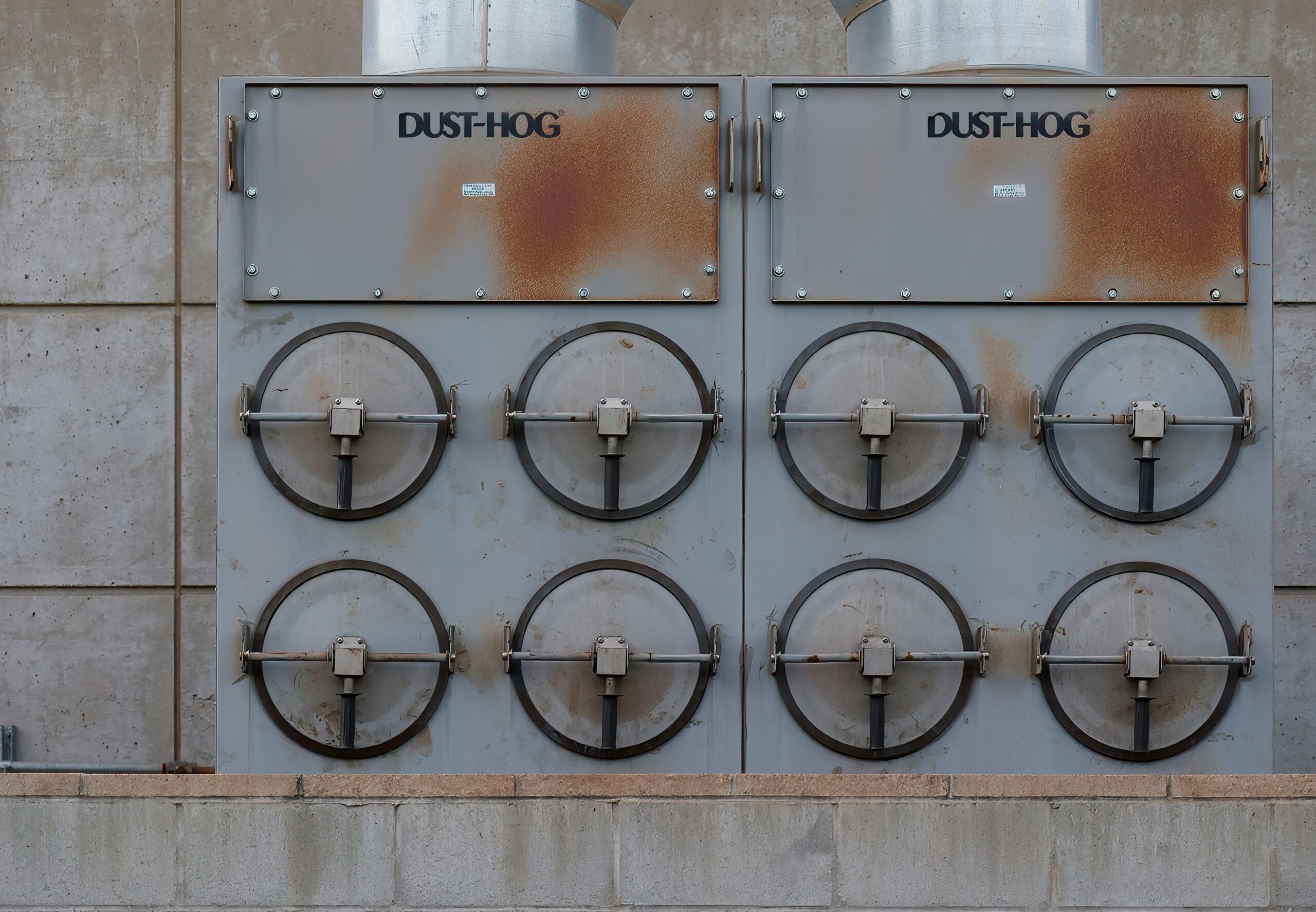
Dust collection systems need their own protection. The collector holds a concentrated dust cloud and is a common primary explosion site, so it typically needs venting or suppression plus isolation from the ductwork feeding it.
Skip high air pressure blow-down. Compressed air lofts the very cloud you’re trying to prevent. 29 CFR 1910.242(b) already limits compressed air for cleaning to under 30 psi with chip guarding and PPE.
People and responders. Personal protective equipment such as flame-resistant clothing reduces flash-fire burns, but it’s the last line of defense. HazCom (29 CFR 1910.1200) treats combustible dust as a hazardous chemical, so it belongs on labels, SDSs, and in training. OSHA 3644, Firefighting Precautions at Facilities with Combustible Dust, and Publication 3674 warn that the wrong firefighting tactics can trigger an explosion, so brief your fire department on your dust hazards in advance.
What OSHA and NFPA Standards Expect
Without a dedicated standard, OSHA relies on the General Duty Clause, Section 5(a)(1) of the OSH Act, plus the standards it lists for combustible dust, including 1910.22 (housekeeping), 1910.94 (ventilation), 1910.146 (confined spaces), 1910.178 (powered industrial trucks), 1910.307 (hazardous locations), and 1910.1200 (HazCom), per OSHA’s combustible dust standards page. The revised Combustible Dust National Emphasis Program (CPL 03-00-008), announced in January 2023, targets inspections at industries with known dust hazards and added commercial bakeries, truss manufacturing, and grain merchant wholesalers. In Houston, those inspections come from the Houston North or Houston South Area Office.
To cite under the General Duty Clause, OSHA must show a recognized hazard, and NFPA standards are commonly used as that evidence. NFPA 660, Standard for Combustible Dusts and Particulate Solids (2025 edition), consolidated NFPA 652 with the commodity standards: NFPA 61 (agricultural and food), NFPA 484 (metals), NFPA 654 (chemicals, plastics, and other particulate solids), NFPA 655 (sulfur), and NFPA 664 (wood). NFPA 68 and 69 still govern venting, suppression, isolation, and inerting. See NFPA 652 vs. NFPA 660 for what changed. Facilities with European parents may also follow the ATEX directives and European standards, though these aren’t U.S. law.
Where a Dust Hazard Analysis Fits
A Dust Hazard Analysis ties the pentagon to your actual floor plan. It identifies where combustible dust is present, which sides of the pentagon exist in each process and building compartment, which safeguards are in place, and what’s missing. NFPA 660 requires a DHA for new and existing processes, led by a qualified person and revalidated every five years.
For leadership, a DHA is the risk assessment that turns “we have dust” into a prioritized list: which collector needs venting, which conveyor needs isolation, which area needs more frequent cleaning. For industrial scale handling of powders, it’s also where combustibility testing gaps surface. That list is what you show an OSHA compliance officer or your insurer.
If you haven’t tested your dust or completed a DHA, start with our Dust Hazards Analysis service. If you need venting, suppression, or hazardous area classification, our explosion protection and electrical classification team handles the engineering.
Frequently Asked Questions
What causes a dust explosion?
A dust explosion happens when five conditions exist at once: combustible dust, oxygen, an ignition source, dust dispersed as a cloud, and confinement in a room or piece of equipment. These five elements are the dust explosion pentagon, and removing any one prevents the explosion.
What is the difference between the fire triangle and the dust pentagon?
The fire triangle has three elements (fuel, heat, and oxygen), and the dust pentagon adds two more: dispersion and confinement. A fire needs only the triangle, but a dust explosion needs the dust suspended in a cloud inside an enclosed space.
What is a secondary dust explosion?
A secondary explosion happens when a smaller primary explosion shakes settled dust loose from floors, beams, and ledges and then ignites it. Secondary explosions are often more destructive than the primary event, as the CSB found at Imperial Sugar in 2008.
How much dust accumulation is dangerous?
OSHA uses NFPA 654’s layer depth method, which flags a 1/32-inch layer covering more than 5 percent of the floor area for a dust with a bulk density of 75 lb/ft³. Lighter dusts allow a deeper layer, and grain elevators have a separate 1/8-inch limit in priority areas under 29 CFR 1910.272(j).
Does OSHA have a combustible dust standard?
No. OSHA enforces combustible dust hazards through the General Duty Clause of the OSH Act, standards such as 1910.22, 1910.272, 1910.307, and 1910.1200, and its Combustible Dust National Emphasis Program (CPL 03-00-008).
How do facilities prevent dust explosions?
Facilities prevent dust explosions by removing sides of the pentagon: housekeeping and dust collection to control fuel, containment to prevent dispersion, ignition source control, and inerting to limit oxygen. Explosion venting, suppression, and isolation limit the damage if an explosion still occurs.
Where Aggie Safety Fits In
Aggie Safety helps Texas manufacturers, food processors, and bulk solids handlers close combustible dust hazards before they become an incident. Our team includes a PSM/RMP specialist and explosion protection expert with over 20 years in oil and gas, petrochemicals, gas processing, and manufacturing, alongside a Sr. OSHA Compliance Officer with more than 40 years of field experience.
We lead Dust Hazards Analysis projects to NFPA 660, review dust collection and explosion protection design, and build housekeeping programs that reach where the CSB keeps finding dust: above ceilings, inside enclosed conveyors, and on overhead steel.
Related reading: NFPA 652 vs NFPA 660: What Changed, Process Safety Management: A Guide for Texas Plant Operators
Call (713) 613-2830 or request a free consultation to schedule a Dust Hazard Analysis and find out which sides of the dust pentagon are still open at your facility.