
Key Takeaways
- Aerial lifts (boom lifts, cherry pickers, articulating platforms) fall under OSHA 1926.453. Scissor lifts are technically classified as mobile scaffolds under 1926.451 and 1926.452(w), but OSHA enforces training and fall protection expectations on both in a similar way.
- Only trained, authorized operators may run an aerial or scissor lift. That training has to be documented, not just assumed because someone “knows how it works.”
- Pre-shift inspections are non-negotiable. A competent person needs to check the equipment before every shift and after anything that could affect its structural integrity.
- Tip-overs are one of the most serious aerial and scissor lift hazards. Uneven ground, improper positioning, excessive loads, and unsafe movement while elevated can all contribute to instability.
- Fall protection requirements differ by equipment type. Boom lifts generally require a full body harness and lanyard. Scissor lifts with intact guardrails typically don’t, unless the manufacturer, rental company, or general contractor says otherwise.
- Houston’s mix of construction, oil and gas, and industrial job sites means aerial work platforms show up constantly, and so do the citations when training and inspection records aren’t in order.
- Aggie Safety’s Aerial Lift/Boom Lift/Scissor Lift training program covers the theory, hands-on, and documentation pieces OSHA expects from a compliant operator certification.
Why Aerial and Scissor Lifts Deserve More Attention Than They Get
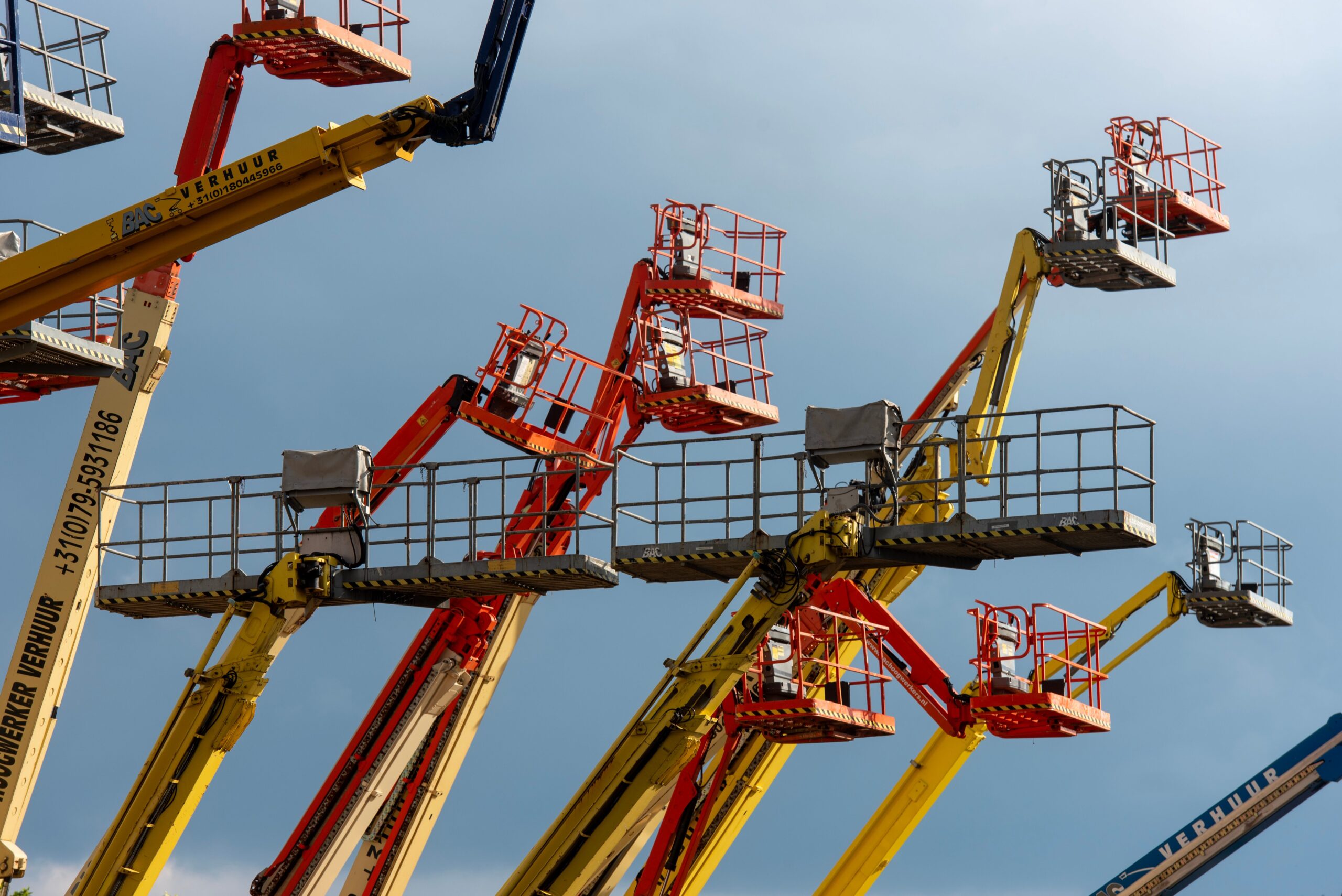
Walk onto almost any commercial job site in Houston and you’ll see one within the first few minutes. A boom lift reaching up to hang electrical conduit, a scissor lift parked under a ceiling grid, a cherry picker positioned along a building’s exterior. They’ve become so common that crews sometimes treat them the way they’d treat a ladder: useful, familiar, and not particularly dangerous.
That assumption is where the trouble starts. Aerial and scissor lifts are involved in a steady stream of serious injuries and fatalities in construction every year, and research on the topic points to a pattern that surprises a lot of supervisors: most fatal incidents aren’t workers falling out of the basket. They’re the machine tipping over, often because of uneven ground, an overextended platform, or a worker pushing the lift’s stability past what the manufacturer designed it for.
For Houston specifically, that risk is compounded by the sheer volume of aerial work platform use across the region’s construction, industrial, and petrochemical sectors. When you combine high usage with the informal “he’s done it before, he’ll be fine” approach some crews take toward training, you get exactly the kind of gap OSHA inspectors are trained to spot.
What OSHA Actually Requires for Aerial Lifts
The core standard here is 29 CFR 1926.453, which covers extendable boom platforms, aerial ladders, articulating boom platforms, vertical towers, and similar equipment. If you’re in general industry rather than construction, the equivalent standard is 29 CFR 1910.67.
A few provisions worth knowing by number, because they’re the ones inspectors check first:
- 1926.453(b)(2)(ii): Only authorized persons may operate an aerial lift. Not “whoever’s free,” not “the new guy who watched a video once.”
- 1926.453(a): Aerial lifts must conform to ANSI A92.2 design and construction standards, which sets the baseline for how the equipment itself is built and maintained.
- 1926.453(b)(2)(v): Employees working from boom-type aerial lifts must use the required personal fall protection system and attach it to the designated anchorage on the boom or basket in accordance with OSHA requirements and the manufacturer’s instructions.
- 1926.453(b)(2)(viii): Before the lift travels, the boom must be inspected to confirm it’s properly cradled and that outriggers are stowed. This is one of the most commonly skipped steps on active job sites.
- 1926.454: Establishes training requirements for employees working on scaffolds and related equipment covered by Subpart L, including relevant aerial and scissor lift operations.
Ground controls generally shouldn’t be operated while someone is in the platform, except in an emergency or when the person up top directs it. Entrance chains or doors need to stay closed while the lift is in use, and operators need to stand on the floor of the bucket rather than climbing on guardrails to reach a little higher. It sounds obvious written out, but these are exactly the behaviors that show up in incident reports again and again.
Where Scissor Lifts Fit In
Here’s where a lot of confusion happens, and where OSHA itself has had to issue clarifications over the years. Scissor lifts don’t actually meet the technical definition of an aerial lift under 1926.453. Because they don’t extend beyond their own wheelbase the way a boom does, OSHA classifies them as mobile scaffolds instead, governed primarily by 1926.451 and the mobile scaffold provisions in 1926.452(w).
That distinction matters less than you’d think in practice. OSHA enforcement treats scissor lifts with the same seriousness as aerial lifts when it comes to training and fall protection expectations, and contractors who assume a scissor lift is “just a platform, not a real lift” are the ones who tend to get cited. If the machine puts someone in the air on a moving platform, treat it like powered equipment: documented training, a pre-shift inspection, and defined operating procedures, every time.
Fall protection is one area where the two do differ for scissor lifts, a properly installed and maintained guardrail system generally provides the required fall protection. Additional personal fall protection may be necessary when the guardrail system is inadequate, when workers leave the protection of the platform, or when required by the equipment manufacturer or applicable site rules.
Inspection Requirements You Can’t Skip
Before-shift inspections aren’t a suggestion. Under the scaffold standard, a competent person needs to inspect the equipment before each work shift and after any occurrence that could have affected its structural integrity, like a hard bump, a fall arrest event, or exposure to severe weather. A basic pre-use checklist should cover:
| Inspection Area | What to Check |
|---|---|
| Tires, wheels, and outriggers | Wear, damage, proper deployment |
| Hydraulic and electrical systems | Leaks or exposed wiring |
| Guardrails, chains, and entry gates | Intact, latched, undamaged |
| Controls | Both at the platform and on the ground, functioning correctly |
| Placards, decals, and load labels | Present and legible |
| Work surface | Slope, stability, and ground conditions where the lift will operate |
Keep a written record of these inspections. If an incident happens and there’s no documentation, the assumption from OSHA’s side is that the inspection didn’t happen, even if it did.
Training Requirements and What “Qualified” Actually Means
Training has to include both theory and hands-on instruction. A worker needs to understand the specific hazards tied to the equipment they’re operating, not just watch a generic safety video once and move on. That means covering fall hazards, electrical hazards near overhead lines, and the mechanical failure risks specific to the type of lift in use.
OSHA does not establish a universal three-year renewal period for aerial or scissor lift training. Retraining is required when workplace conditions or equipment change, when new hazards are introduced, or when an employee demonstrates that they have not retained the knowledge or skills needed to operate the equipment safely.
Building This Into Your Houston Job Site Routine
None of this works as a one-time event. The contractors who avoid citations and, more importantly, avoid incidents, are the ones who build aerial and scissor lift safety into daily routine rather than treating it as paperwork to complete once a year. That means pre-shift inspections that actually happen, supervisors who know the difference between an aerial lift and a scissor lift requirement, and operators who are certified rather than just experienced.
Where Aggie Safety Fits In
If your team needs OSHA-compliant aerial lift, boom lift, and scissor lift training, Aggie Safety’s Aerial Lift/Boom Lift/Scissor Lift certification program covers the operating, inspection, and hazard recognition requirements outlined above, with documentation your team can produce if OSHA ever asks for it. If you’re not sure whether your current training or inspection records would hold up under review, Aggie Safety’s safety consultants can walk your Houston job site and tell you exactly where the gaps are before an inspector does.
Related reading: our Safety Training programs and “H2S Awareness” for the confined-space hazards that often show up on the same industrial job sites.
Call (713) 613-2830 or request a free consultation with Aggie Safety’s safety consultants.
Frequently Asked Questions
Do scissor lifts require fall protection?
Generally not, if the guardrails are intact, since the guardrail system is considered adequate fall protection on its own. If the manufacturer, rental company, or general contractor requires tie-off anyway, that requirement wins.
How often does aerial lift operator training need to be renewed?
Retraining is expected roughly every three years, or sooner if job duties change, a new hazard appears on-site, or the worker is observed operating the equipment unsafely.
What OSHA standard covers aerial lifts?
29 CFR 1926.453 for construction; 29 CFR 1910.67 for general industry. Scissor lifts fall instead under the mobile scaffold provisions of 1926.451 and 1926.452(w).
Who is responsible for pre-shift lift inspections?
A competent person must inspect the equipment before every shift and after any occurrence that could affect its structural integrity.
What causes most aerial lift fatalities?
Tip-overs, not falls from the platform, cause the majority of boom and scissor lift fatalities, typically from uneven ground, overextension, or exceeding the manufacturer’s stability limits.
Frequently Asked Questions
Do scissor lifts require fall protection?
Generally not, if the guardrails are intact, since the guardrail system is considered adequate fall protection on its own. If the manufacturer, rental company, or general contractor requires tie-off anyway, that requirement wins.
How often does aerial lift operator training need to be renewed?
Retraining is expected roughly every three years, or sooner if job duties change, a new hazard appears on-site, or the worker is observed operating the equipment unsafely.
What OSHA standard covers aerial lifts?
29 CFR 1926.453 for construction; 29 CFR 1910.67 for general industry. Scissor lifts fall instead under the mobile scaffold provisions of 1926.451 and 1926.452(w).
Who is responsible for pre-shift lift inspections?
A competent person must inspect the equipment before every shift and after any occurrence that could affect its structural integrity.
What causes most aerial lift fatalities?
Tip-overs, not falls from the platform, cause the majority of boom and scissor lift fatalities, typically from uneven ground, overextension, or exceeding the manufacturer’s stability limits.

