Key Takeaways
- HazCom is one of the most frequently cited OSHA standards nationally and in Texas, which makes it one of the easiest violations to avoid and one of the most common to get flagged for.
- OSHA’s 2024 update to the Hazard Communication Standard aligns U.S. rules with GHS Revision 7, changing hazard classifications, label elements, and Safety Data Sheet content.
- OSHA pushed the compliance deadlines back four months in January 2026. For most Houston employers using hazardous chemicals, the deadline to update workplace labels, your written HazCom program, and employee training is now November 20, 2026.
- A compliant GHS label needs six specific elements: product identifier, signal word, hazard statements, precautionary statements, pictograms, and supplier contact information.
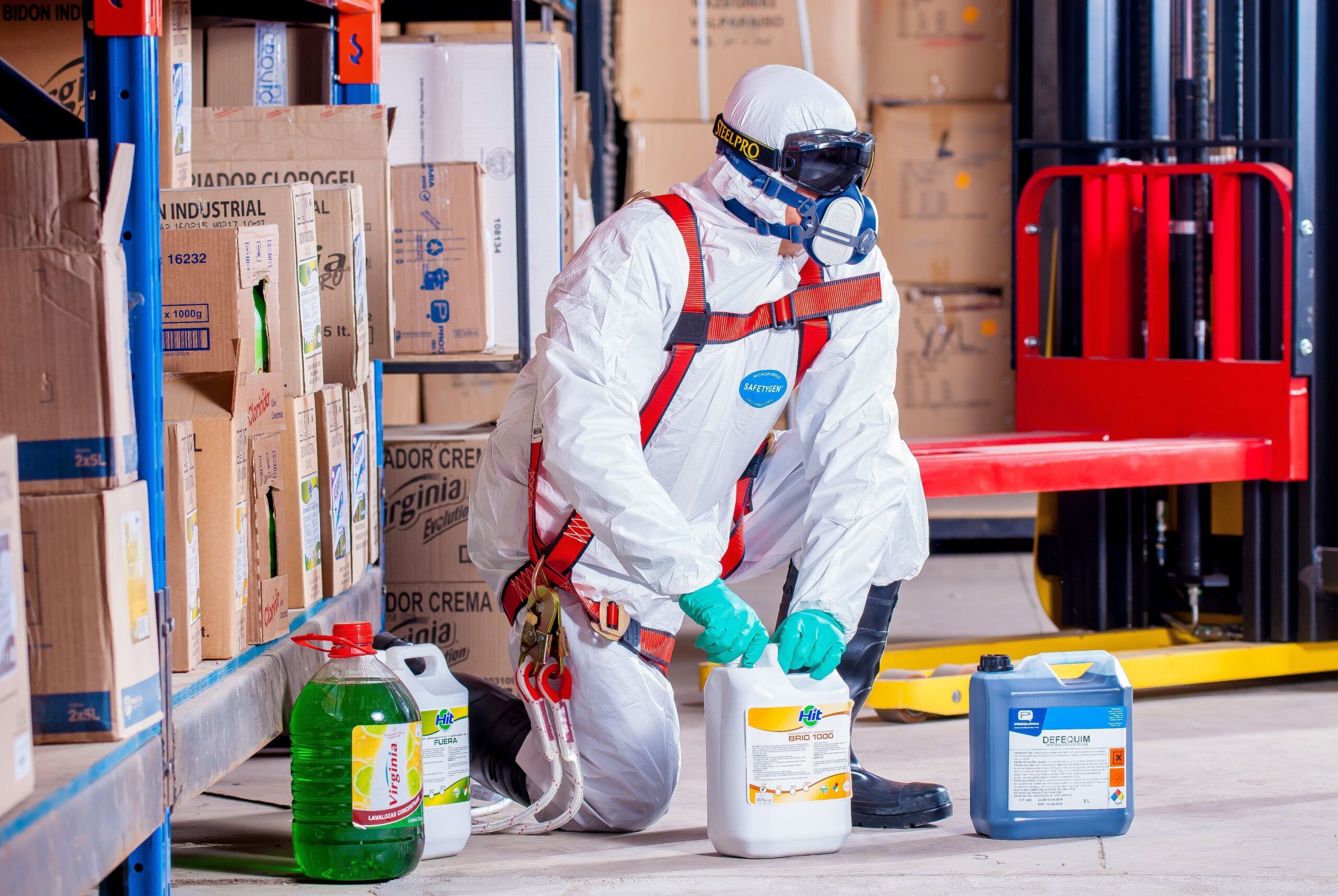
- Secondary containers — the smaller bottles and bins workers fill from a larger drum — have their own labeling rules, and they trip up more Houston facilities than any other part of HazCom.
- Safety Data Sheets have to be current, accurate, and genuinely accessible to every employee who works with or near the chemical, not just filed away somewhere.
Why HazCom Still Trips Up So Many Houston Employers
Hazard communication has been near the top of OSHA’s most-cited standards list for over a decade, and getting HazCom and GHS labeling requirements right in Houston is a persistent challenge. The city’s mix of manufacturing, oil and gas, petrochemical, and construction employers means that any facility storing, using, or shipping hazardous chemicals falls under this standard — whether that’s a small fabrication shop or a large petrochemical plant.
What makes HazCom different from a lot of OSHA standards is that it’s not really one requirement. It’s a system: labels, Safety Data Sheets, employee training, and a written program all have to work together and stay consistent with each other. Miss one piece and the whole system breaks down, which is exactly why OSHA inspectors keep finding violations here.
And in 2026, there’s an added wrinkle. OSHA finished rolling out a major update to the standard, and the compliance clock for Houston employers is now ticking on a revised schedule.
What Is the Hazard Communication Standard (HazCom)?
The Hazard Communication Standard is found at 29 CFR 1910.1200 for general industry employers, and at 29 CFR 1926.59 for construction. Both trace back to the authority OSHA was granted under the Occupational Safety and Health Act of 1970. In plain terms, HazCom exists so that every worker who handles hazardous chemicals knows what they’re working with, what the risks are, and how to protect themselves.
OSHA built HazCom around what’s often called the “right to know” principle. Employers who bring hazardous chemicals into the workplace have to communicate that hazard information clearly and consistently — through labels on containers, Safety Data Sheets that go into detail, and training that ties it all together. A hazard communication program is the written document that spells out exactly how your facility does all three.
The Move to GHS: Why Global Harmonization Matters
Before the Globally Harmonized System existed, different countries — and sometimes different agencies within the same country — used different rules for classifying and labeling chemicals. A container that crossed a border could end up with conflicting hazard information, or none at all.
The Globally Harmonized System was built to fix that by giving every country a shared set of rules for hazard classification, labeling, and Safety Data Sheet content. OSHA adopted GHS into the U.S. Hazard Communication Standard in 2012, and the goal has always been the same: one set of hazard symbols and terms that workers, emergency responders, and regulators everywhere can recognize.
This harmonization also matters for chemical manufacturers who ship internationally. GHS labeling helps align OSHA’s requirements with the Department of Transportation’s hazmat rules, the International Maritime Organization’s IMDG Code for ocean freight, and comparable systems abroad, including Health Canada’s Workplace Hazardous Materials Information System. A chemical shipment leaving a Houston port often has to satisfy several of these systems at once, and consistent GHS labels make that far more manageable.
The 2024 HazCom Update and What It Means for 2026
In May 2024, OSHA finalized a significant update to the HazCom standard, moving it primarily to GHS Revision 7 with a few elements from Revision 8. The rule took effect on July 19, 2024, and it changed hazard classification requirements, label elements, and Safety Data Sheet content. It also introduced new categories, including desensitized explosives, and refined how certain physical hazards — such as pyrophoric gas — get classified and labeled.
Because a change this size affects an enormous number of products and workplaces, OSHA built in a phased compliance schedule, with different deadlines for chemical manufacturers versus end-use employers, and different deadlines for pure substances versus mixtures. On January 15, 2026, OSHA published a final rule extending every one of those deadlines by four months, citing delays in getting supporting guidance documents published. Here’s where things stand:
- Substance evaluation and classification (chemical manufacturers, importers, distributors): extended from January 19, 2026 to May 19, 2026
- Employer updates for substances (workplace labels, written HazCom program, employee training): extended from July 20, 2026 to November 20, 2026
- Mixture evaluation and classification: extended roughly four months, moving into late 2027
- Employer updates for mixtures: extended from January 19, 2028 to May 19, 2028
For most Houston employers who use hazardous chemicals rather than manufacture them, the deadline that matters most is November 20, 2026. That’s when your workplace labels, written hazard communication program, and employee training all need to reflect the updated standard. During the transition, OSHA is allowing employers to comply with either the 2012 version of HazCom, the 2024 update, or a combination of both — but that flexibility runs out once your applicable deadline arrives.
What Belongs on a Compliant GHS Label
Every GHS label needs the same six elements, whether it’s on a 55-gallon drum or a small container on a lab bench:
- Product identifier — the chemical name or code that matches the Safety Data Sheet
- Signal word — either “Danger” or “Warning,” depending on severity
- Hazard statement — describes the nature of the hazard, for example “Causes skin irritation”
- Precautionary statement — tells the worker what to do to avoid the hazard
- Pictograms — the diamond-shaped hazard symbols (flame, skull and crossbones, corrosion, and so on)
- Supplier information — the name, address, and phone number of the chemical manufacturer or responsible party
Getting these right matters because workers often make split-second decisions based on what’s on the outside of a drum or bottle. A missing hazard statement or the wrong signal word isn’t just a paperwork issue — it’s a genuine gap in how well your team understands what they’re handling. When existing labels are outdated or damaged, relabeling promptly rather than waiting for a scheduled inspection is the safer call.
Secondary Containers and Small Container Labeling
This is where a lot of otherwise well-run Houston facilities lose points during an OSHA inspection. Secondary containers — the smaller bottles, buckets, and bins that workers fill from a larger drum for day-to-day use — still need a label under HazCom. The only real exception is for containers that are filled and used immediately by the same person and emptied or cleaned before that person’s shift ends.
For everything else, a secondary container needs either the full GHS label or, at minimum, the product identifier plus words, pictures, or symbols that give workers general information about the hazard. Containers too small for a full label can use a tag, tear-off label, or other approach, as long as the essential hazard information still comes through clearly.
Outer packaging matters too, especially for facilities receiving chemical shipments in combination packaging — where an inner container sits inside an outer box or drum. If the inner container’s label isn’t visible through the outer package, the outer package needs its own compliant label.
Label Durability for Houston’s Industrial Environments
Houston’s humidity, heat, and heavy industrial use put real stress on printed labels. A label that fades, smears, or peels off within a few months isn’t doing its job, even if it was fully compliant on the day it was printed.
Label selection should account for chemical resistance, UV exposure, and how much handling the container sees. If your facility is manually printing large volumes of GHS labels and running into durability problems, look for labels rated for industrial chemical exposure and outdoor conditions. Whatever you use, the standard hasn’t changed: if a worker can’t read the label, it isn’t doing its job.
Safety Data Sheets: The Other Half of HazCom
Labels give workers a quick snapshot. Safety Data Sheets fill in the rest. Every hazardous chemical in your facility needs a current SDS, organized in the standard 16-section format, covering everything from first aid measures to handling and storage recommendations.
Two things trip up employers most often here. First, SDSs that are outdated because a chemical manufacturer updated their formula or hazard classification and the facility never received or filed the new version. Second, accessibility: OSHA expects SDSs to be readily available to employees during their work shift — not locked in an office that’s closed when the second shift comes in.
Building a Compliant Hazard Communication Program
A written hazard communication plan ties labels, SDSs, and training together into one document that describes exactly how your facility handles hazardous chemicals. At minimum, it should cover:
- A current chemical inventory
- How labels and Safety Data Sheets are maintained and updated
- How new employees and contractors learn about chemical hazards on your site
- How non-routine tasks involving hazardous chemicals are handled
That third point matters more than most employers realize. Under HazCom, host employers — including general contractors on multi-employer job sites — are required to inform subcontractors and their employees about any hazardous chemicals they may encounter on site. That communication has to go both directions: the host employer shares what’s in the facility, and subcontractors are responsible for informing the host employer about chemicals they’re bringing in.
HazCom training has to happen at hire and again whenever a new hazard is introduced or a worker’s job duties change. Good training goes beyond a slideshow; workers should walk away able to read a GHS label, find the right section of an SDS, and know what to do if something goes wrong. A periodic review of what’s actually in the facility against what’s documented helps catch gaps before an inspector does.
How Aggie Safety Helps Houston Employers Stay Ahead of HazCom
Workplace safety isn’t something you want to figure out during an OSHA inspection. Aggie Safety works with Houston-area employers across construction, oil and gas, manufacturing, and industrial operations to build hazard communication programs that hold up — from chemical inventories and GHS label audits to hands-on bilingual training for mixed-language crews.
If your facility hasn’t reviewed its HazCom program against the 2024 update, the November 2026 deadline is the right forcing function. Request a free safety consultation or call (713) 613-2830 to talk with a Houston OSHA safety consultant about where your program stands today.