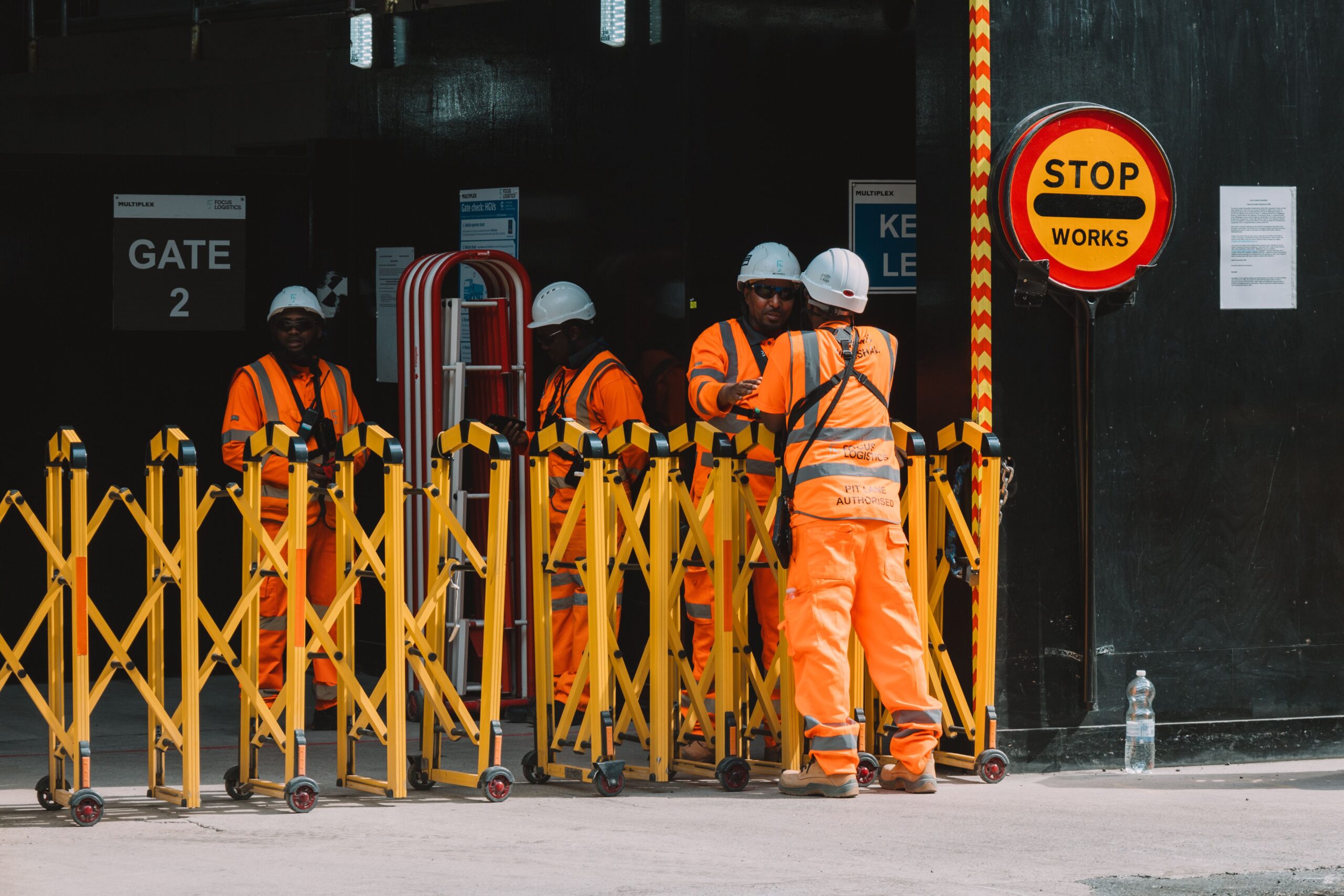
A compliance officer from the Occupational Safety and Health Administration (OSHA) walks onto your job site or through your facility door. They show credentials and ask to speak with whoever is in charge.
You have the next 30 seconds to set the tone for everything that follows.
This guide is written for the person holding their phone in that moment: the site supervisor, the general contractor, the plant manager, the safety coordinator. Follow these steps in order. Each one matters.
Don’t Panic, But Do Act Fast
An OSHA inspection is not an emergency in the crisis sense, but it is time-sensitive in the legal sense. The OSHA Act (Occupational Safety and Health Act) grants OSHA compliance officers broad authority to inspect workplaces and everything from the opening conference to the closing conference becomes part of the enforcement record.
The most common mistake Houston employers in the construction industry and manufacturing sector make is treating an OSHA visit like a routine interaction. It is not. OSHA compliance officers are trained to identify safety violations, document workplace hazards, and classify findings for citation. Your goal is to be cooperative, professional, and prepared not defensive, not hostile, and not uninformed.
Understanding inspection priorities ahead of time, whether the visit is programmed, triggered by an imminent danger situation, a fatality or catastrophic accident, an employee complaint, or a referral will shape how you manage the process.
Step 1: Verify the Inspector’s Credentials
Before anything else, ask to see the compliance officer’s official credentials. A legitimate OSHA Compliance Safety and Health Officer (CSHO) will carry and produce a U.S. Department of Labor identification card.
Write down the inspector’s name, badge number, and the OSHA area office they represent. Note the date and time of arrival. This is not obstruction, it is standard professional practice, and OSHA inspectors expect it.
Step 2: Call Your Safety Consultant Immediately
Before the opening conference begins, step aside and call your safety consultant or legal counsel. This is your right as an employer, and OSHA is required to allow a reasonable delay, typically 15–30 minutes, while you contact representation.
If you don’t have a safety consultant on retainer, call Aggie Safety at 713-613-2830. An experienced OSHA compliance safety and health officer consultant can coach you through the opening conference, advise on walkaround protocols, and be on-site within hours if needed.
Do not proceed to the opening conference without at least a brief phone consultation if you can avoid it. The guidance you receive in that 15-minute window can prevent costly mistakes during the walk-around inspection.
Step 3: Opening Conference – Know Your Rights
Enhancing Workplace Safety
The opening conference is the inspector’s first formal step. They will explain the purpose of the inspection, the inspection scope, and the OSHA regulations they plan to evaluate. Listen carefully and take notes on everything.
What OSHA can request:
- A walk-around inspection of the facility or job site
- Access to OSHA 300 logs, 300A annual summaries, and 301 incident reports for the past five years
- Written safety policies, safety programs, training records, and PPE assessments
- Industrial hygiene samples and medical records in accordance with Section 8(e) of the OSH Act
- Authority to conduct private employee interviews
What you should do:
- A walk-around inspection of the facility or job site
- Access to OSHA 300 logs, 300A annual summaries, and 301 incident reports for the past five years
- Written safety policies, safety programs, training records, and PPE assessments
- Industrial hygiene samples and medical records in accordance with Section 8(e) of the OSH Act
- Authority to conduct private employee interviews
What you should not do:
- Volunteer information beyond what is asked
- Answer questions on behalf of employees
- Make verbal admissions about known safety violations
- Allow the inspector to wander the work site unescorted
Know your Fourth Amendment rights. While OSHA generally does not need a warrant for inspections of regulated industries, employers in certain circumstances can require one. Consult legal counsel before refusing entry.
Step 4: The Walkaround Inspection – Who Goes and What to Say
Under the walkaround rule established by OSHA, you have the right to have a management representative accompany the OSHA inspector during the entire walk-around inspection. Exercise this right. Designate someone who knows the facility, understands OSHA regulations, and can answer questions accurately without over-explaining. Union representatives, if applicable, also have the right to participate.
During the walk-around inspection:
- Walk at the inspector’s pace, do not rush them and do not stall
- Bring a digital camera or phone, if the inspector photographs something, note what it is and photograph it yourself immediately
- Bring a measuring tape and dry-erase board or notepad to document conditions and measurements in real time
- If the inspector takes industrial hygiene samples, request copies of the results
- If the inspector identifies a work site safety hazard, ask for the specific OSHA standard being cited
- Do not argue with the inspector’s observations during the walkaround, the time for rebuttal is the informal conference
If something the inspector observes can be corrected immediately, a missing machine guarding panel, a fall protection gap, a blocked emergency exit, correct it on the spot. OSHA compliance
officers note whether conditions are corrected during the inspection, and that documentation supports a good-faith finding later, which is a key penalty reduction factor.
Key areas OSHA commonly scrutinizes in Houston job sites include fall protection, confined space and LOTO (Control of Hazardous Energy), respiratory protection, powered industrial trucks, machine guarding, Hazard Communication programs, and the overall safety culture of the operation.
Step 5: Employee Interviews – What OSHA Can and Cannot Do
Under the OSH Act, OSHA has the right to conduct private interviews with employees. Private means without management present. The employee has the right to have a third party or representative present if they choose.
What to communicate to your workforce before any OSHA investigation:
- Employees should answer OSHA questions honestly and directly based on their own observations
- Employees should describe conditions as they exist, not speculate about causes or company policies
- Employees have rights under the OSH Act, including the right to report workplace hazards without fear of retaliation
- Employee complaints are protected, any disruptive behavior toward employees discussing safety concerns with an inspector can become a separate violation
Coaching employees to provide misleading witness statements to OSHA is illegal and will make any citation outcome significantly worse. The goal is honest, accurate representation of conditions, not coached responses.
Importantly, trade secrets observed during the inspection are protected. If the inspector enters an area containing proprietary processes or materials, you can request confidential treatment under OSHA’s trade secrets provisions.
Step 6: Closing Conference
At the end of the OSHA inspection, the compliance officer will conduct a closing conference. They will describe the apparent safety violations observed, the OSHA regulations they believe are implicated, and the potential citation types they plan to recommend. Take detailed notes.
Ask the inspector to specify:
- Each apparent safety violation and the OSHA standard number
- The violation classification they intend to recommend (serious, willful, repeat, other-than-serious)
- The expected timeline for receiving the citation and any follow-up inspections
Do not sign anything at the closing conference unless your legal counsel has reviewed it. The closing conference is informational, you are not required to agree with the inspector’s findings on-site.
The 48 Hours After OSHA Leaves
What you do immediately after the OSHA investigation shapes the outcome of any citation.
Document every condition the inspector observed – with photographs, written descriptions, and measurements where applicable. Create your own record before anything changes.
Begin corrective and preventive action plans immediately – fix cited conditions and document every corrective step with dates, methods, and responsible parties. Good-faith corrective action is one of OSHA’s primary penalty reduction criteria.
Contact a safety consultant or OSHA defense attorney – if the inspection scope was broad or the inspector noted serious violations, get professional guidance before the citation arrives. The 15-working-day contest window begins when the citation is received, not when the OSHA inspection occurs.
Review and update your safety bulletin board and safety and health rules posting – OSHA requires that citations be posted at or near the worksite where the violation occurred.
Do not destroy or alter records – tampering with OSHA logs, OSHA 300 logs, training records, or any documentation the inspector reviewed is a separate violation and can result in criminal referral.
After the Citation: Your 15-Day Window
If OSHA issues citations, you have 15 working days from the date you receive them to either file a Notice of Contest with the Occupational Safety and Health Review Commission (OSHRC) or request an informal conference with the OSHA Area Director.
The informal conference, sometimes called an internal settlement conference is almost always the right first move. It gives you the opportunity to present corrective action documentation, apply penalty reduction factors (employer size, good faith, history), and negotiate the total penalty without administrative hearings or formal review board proceedings.
If the informal conference does not resolve the matter, your attorney can pursue the citation through the formal OSHRC process, including administrative hearings and, if necessary, federal courts. Settlement agreements are common and often the most cost-effective outcome.
Aggie Safety has guided Houston employers through OSHA informal conferences and citation responses across construction, manufacturing, and industrial sectors. The $16,000+ in OSHA fines saved per engagement comes directly from properly prepared corrective action documentation and the right penalty reduction arguments presented at the informal conference.
Book a Mock OSHA Inspection to Prevent This Situation Entirely
The most effective OSHA response is the one that happens before OSHA arrives. A mock inspection from Aggie Safety replicates exactly what a real OSHA compliance officer does on-site, physical walk-around inspection, documentation review, and a prioritized findings report so workplace hazards and safety-related risks are corrected internally, with no citation and no penalty.
Our Environmental Health and Safety consultants also provide safety training, safety audits, and a complete loss control program to build a long-term safety culture across your organization.
Call 713-613-2830 to book a mock OSHA inspection or discuss citation response with Aggie Safety’s consultants. We serve job sites and facilities across Greater Houston including Baytown, Pasadena, Katy, League City, and Cypress.
Last Updated: 2026 | This guide applies to OSHA inspections under federal OSHA jurisdiction in Texas. Texas is a federal OSHA state, the Texas Department of Insurance Division of Workers’ Compensation enforces occupational safety standards for state and local government employers only.